
solar protocol uses the sun to propose alternative forms of computing
since 2021, solar protocol has developed a system for hosting websites on renewable energy-powered servers, provoking new methodologies on technological development.
prefer designboom on googleEXPLORING eco-conscious forms OF technological development
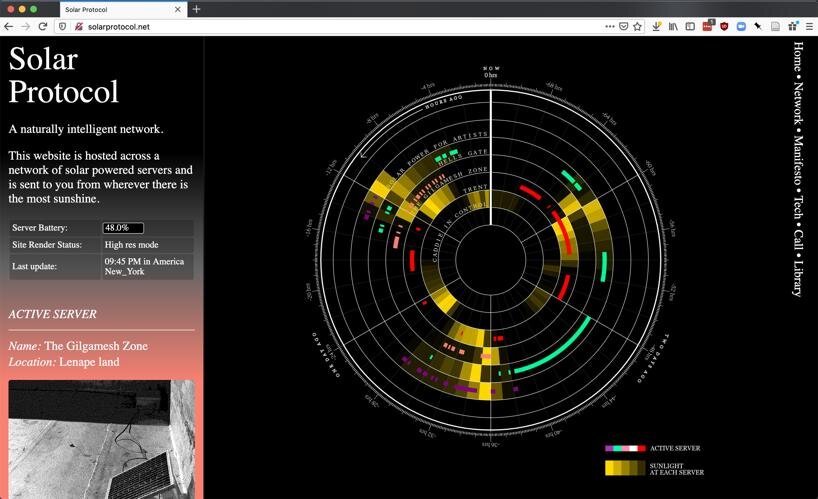
When visiting the Solar Protocol website on a random evening, one is met with following message: ‘This website is hosted across a network of solar powered servers and is sent to you from whichever server is in the most sunshine. Presently you are on a server called Rhizome that is located in 18th Street Arts Center, Los Angeles, USA.’ It’s the protocol node — the small, data hosting computer that is the basis of the website — that belongs to rhizome.org, the non-profit founded in the mid-nineties that supports new media art.

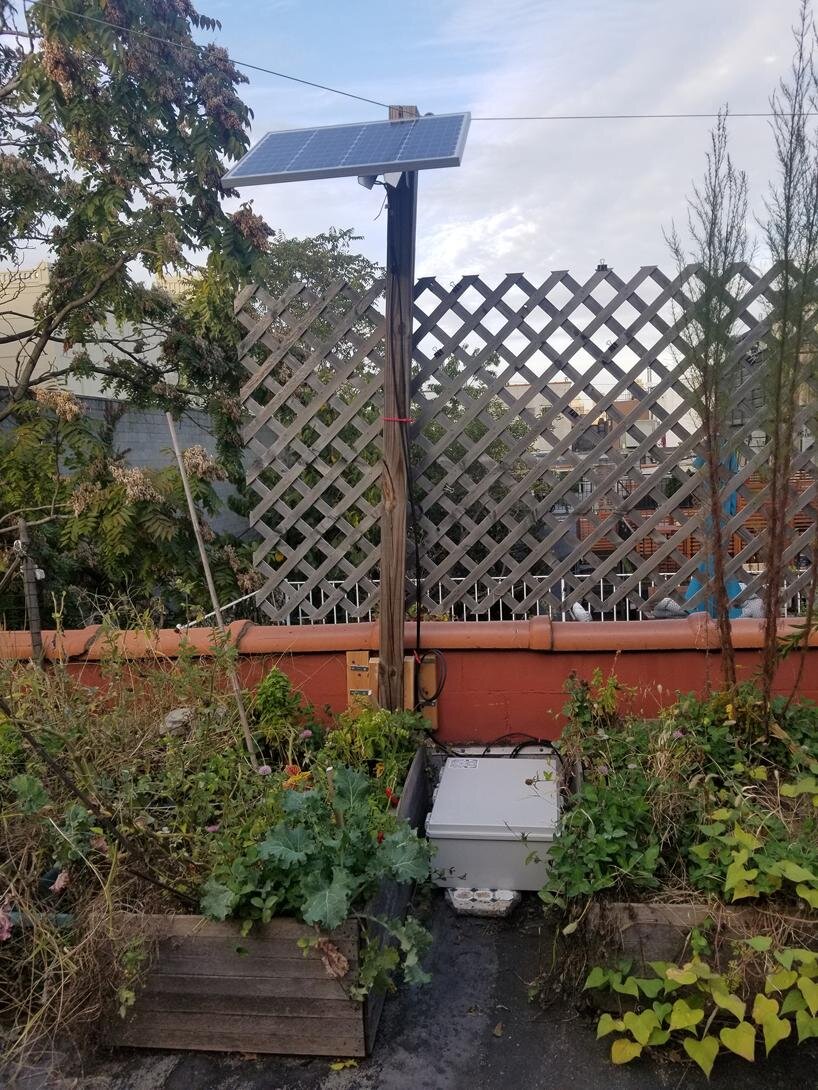
Below this blurb, there are some details about the California-based server: its battery is at 85%, there’s an image of it sitting atop an innocuous building with a palm tree framing it in the background, the current temperature there is a fair 18.2 degrees Celsius and the weather is described as ‘broken clouds.’ It also shares the PV (photovoltaic) power, current, and voltage state.
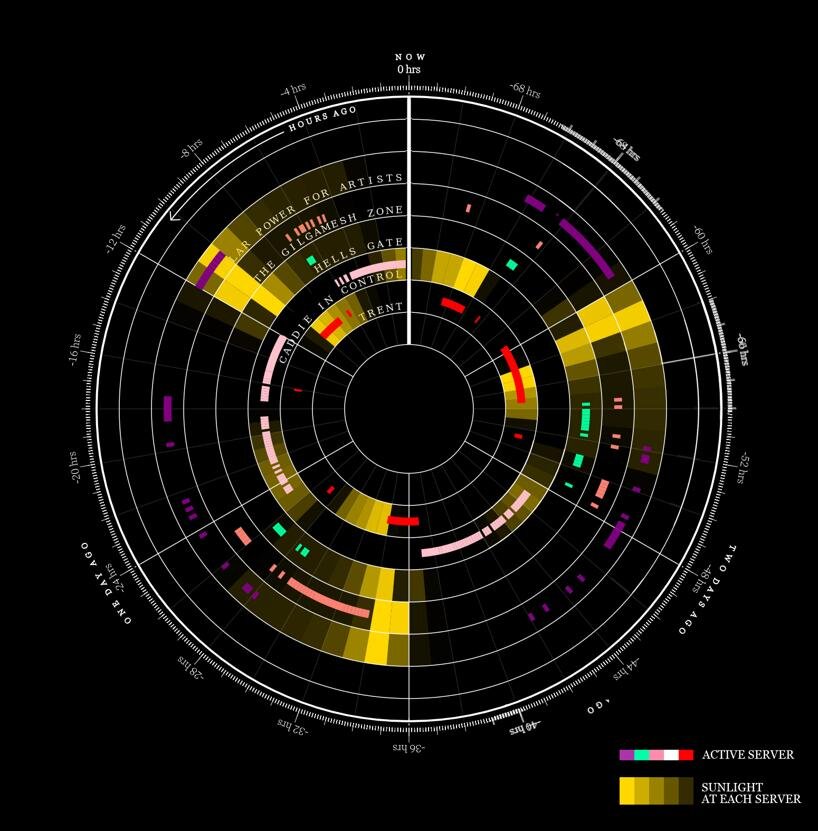
But visit solarprotocol.net on another evening and you may find yourself in Nairobi, Kenya; Santiago, Chile; Beijing, China; or Alice Springs, Australia. That’s because the project is hosted on a number of solar-powered servers dotted around the world. With shifting weather patterns, the time of day, or even the time of year, it would be difficult for just one to power a whole website. But with the distributed network put in place by Solar Protocol, as the Earth rotates around the sun, there is always at least one node with enough battery life to power the site.

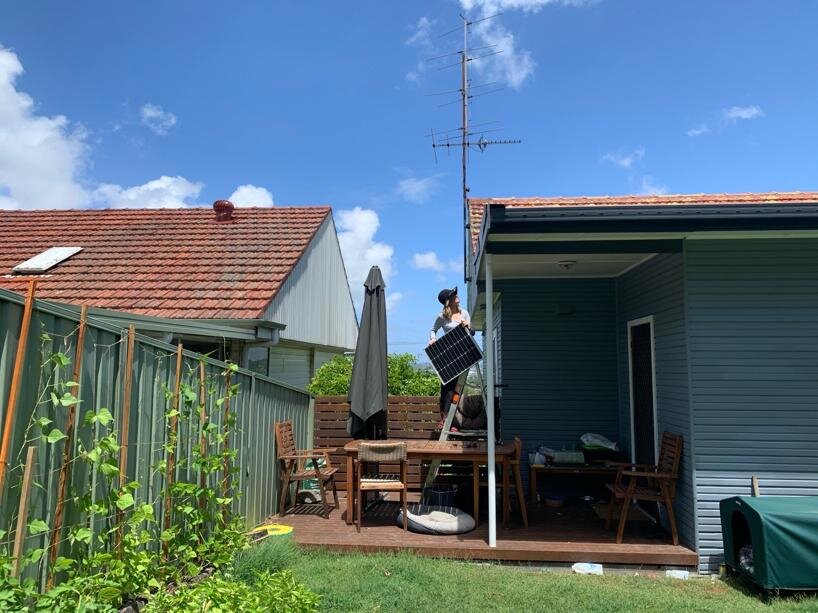
The project is sustained through an international smattering of volunteers who, through basic instructions and verve, have constructed and maintained local servers. In a paper by project leads Alex Nathanson, Tega Brain, and Benedetta Piantella, ‘Solar Protocol: Exploring Energy-Centered Design,’ these volunteers are affectionately called ‘server stewards,’ in an ode to the project, ‘Distributed Web of Care,’ by Taeyoon Choi and collaborators. In an update on the project, Alex Nathanson further elaborated that ‘the stewards include individuals, community organizations, art spaces, and universities around the world. This size of the network ebbs and flows, based on a wide range of factors from geopolitics to roommate politics.’
Through an open call, Solar Protocol was able to recruit interested parties who would source parts locally and set up a server for the site. Not only does it host its own website, but it hosts the website of some ‘server stewards,’ effectively aiming to create what they envision as a ‘virtual artist-run space,’ powered with renewable energy.

Through their website, anyone who wants to volunteer to host a server can access detailed instructions on how to become a steward. Upon entering this page, the cheeky title, ‘What do you need to install a small scale solar system?’ greets the curious before enumerating the care and expertise needed to build and maintain a node. While it sounds technically challenging, the team had designed these servers with just the following: ‘50-watt (W) photovoltaic (PV) module, a charge controller, 22 amp hour (Ah) sealed lead acid battery, various overcurrent protection devices, and a low voltage disconnect for the battery.’ All of which were carefully chosen because they were easy to source in most countries, lowering the barrier to entry to the project.
While Solar Protocol maintains a series of functioning websites, it’s ultimately an artistic project: a provocation on what is possible in computing. It questions what ‘efficiency’ means in the context of modern technology. While most of us ask our computers to be fast, giving us near-instant results and on-demand screening, what if we also asked our computers to be kind to the planet? Built in a way that also considers the longevity of the environment.

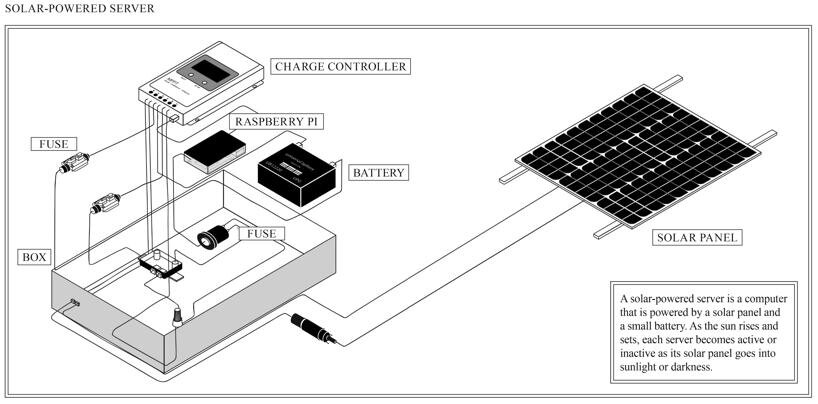
In addressing its core principles, they write, ‘The Solar Protocol network explores the sun’s interaction with Earth as a form of logic that shapes the daily behaviors, seasonal activities and the decision making of almost all life forms. Solar Protocol honors this natural logic, exploring it as a form of intelligence that is used to automate decisions in a digital network.’
Since its inception, Solar Protocol has also become a jumping-off point for a dialogue on more eco-conscious forms of technological development. They have participated in several exhibitions and continued to launch initiatives that invite artists, researchers, and the public to rethink the relationship between technology and the planet.

project info:
name: Solar Protocol
founding date: 2021
leads: Tega Brain , Alex Nathanson, and Benedetta Piantella
paper: Solar Protocol: exploring energy-centered design
This article is part of designboom’s Crafting the Future chapter, exploring what it means to be a maker in today’s world and the future of craftsmanship. Discover more related stories here.
shop
your own online design shop — no sales commission collected