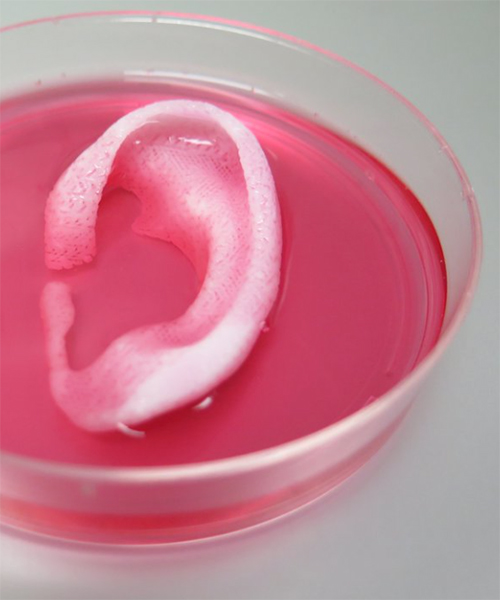
scientists produce functioning 3D printed replacement tissue
when implanted, the structures mature into functional tissue and developed a system of blood vessels.
prefer designboom on google[FEATURED]
scientists produce functioning 3D printed replacement tissue
all images courtesy of wake forest baptist medical center
using a sophisticated, custom designed 3D printer, regenerative medicine scientists at wake forest baptist medical center in wintson-salem, north carolina, have proved that it is feasible to print living tissue structures to replace injured or diseased tissue in patients. the research began in 2006, with basic material printing tests.
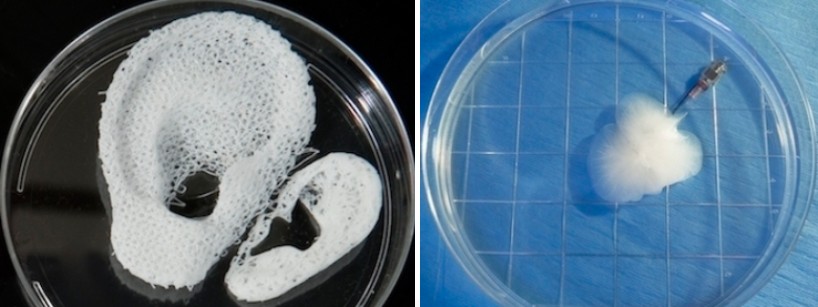 the tissue be generated in the lab
the scientists said they printed ear, bone and muscle structures. when implanted, the structures matured into functional tissue and developed a system of blood vessels. most importantly, these early results indicated that the structures have the right size, strength and function for use in humans.
‘this novel tissue and organ printer is an important advance in our quest to make replacement tissue for patients,’ describes anthony atala, M.D., director of the wake forest institute for regenerative medicine. ‘it can fabricate stable, human-scale tissue of any shape. With further development, this technology could potentially be used to print living tissue and organ structures for surgical implantation.’
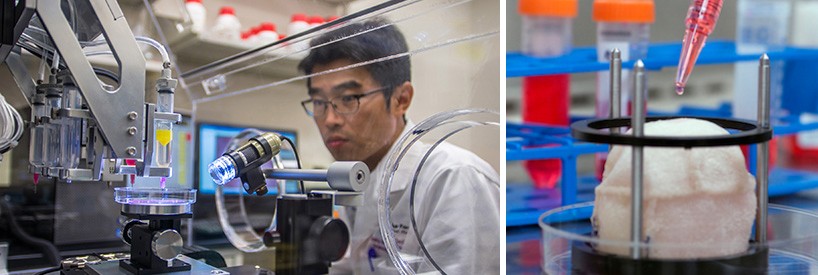 scientists developed a new printing machine for creating the tissue
tissue engineering is a science that aims to grow replacement tissues and organs in the laboratory to help solve the shortage of donated tissue available for transplants. the precision of 3D printing makes it a promising method for replicating the body’s complex tissues and organs. however, current printers based on jetting, extrusion and laser-induced forward transfer cannot produce structures with sufficient size or strength to implant in the body.
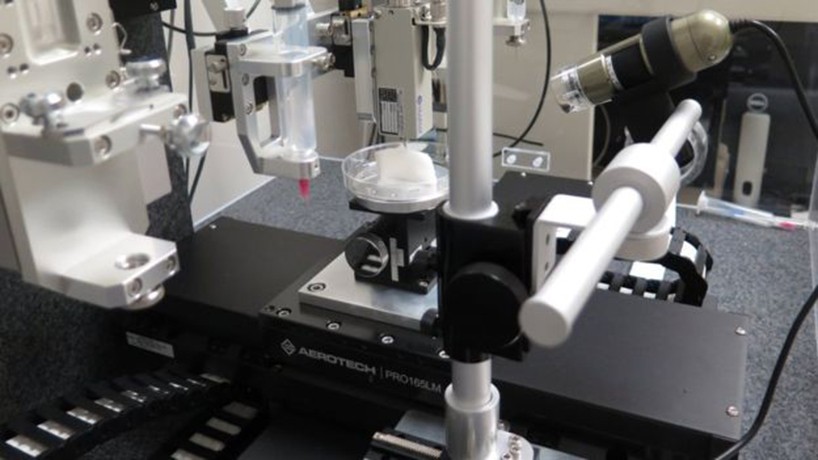 the printer from new tissue to exact dimensions for a patient
shop
your own online design shop — no sales commission collected