ying gao’s robotic clothes shine with broken mirrors that dance on their own
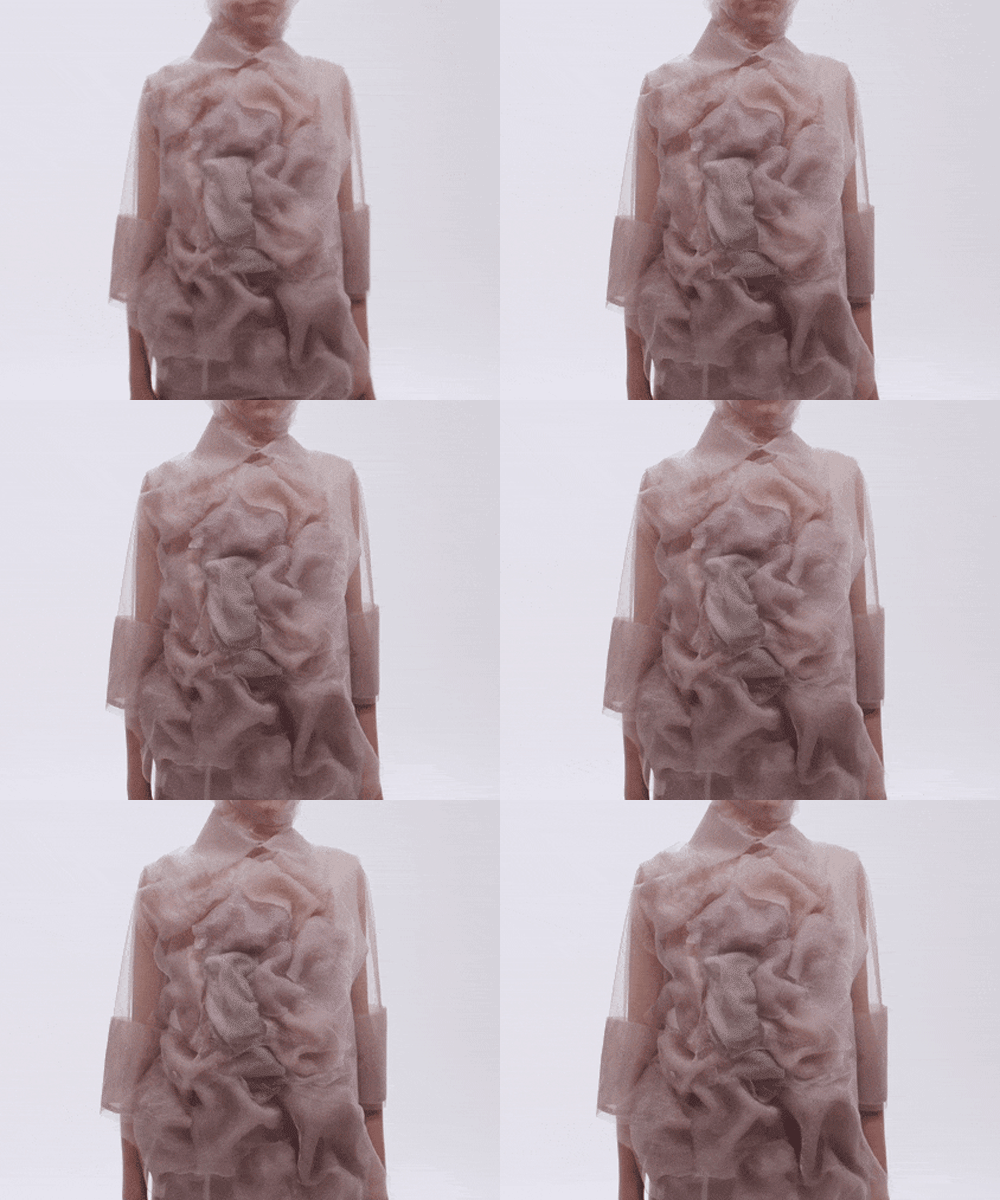
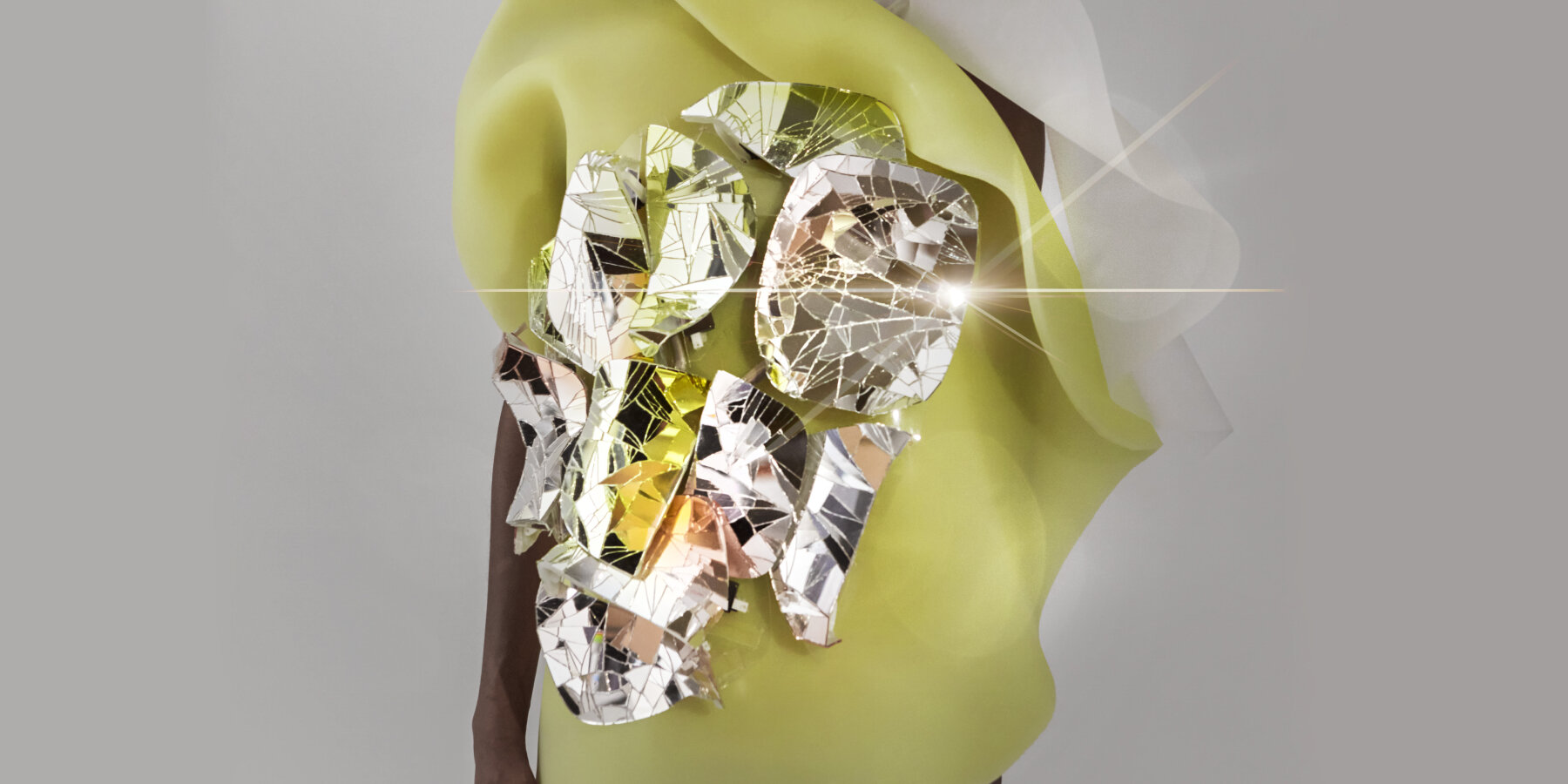
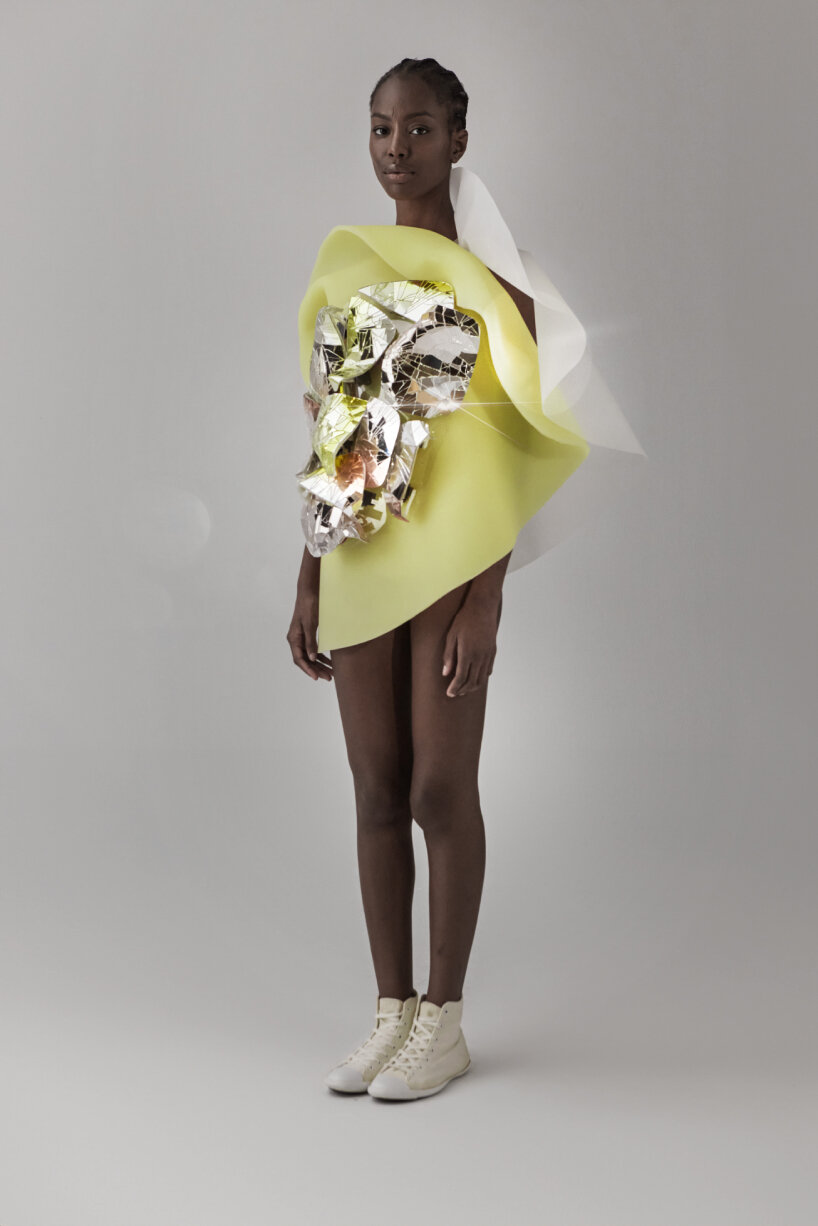
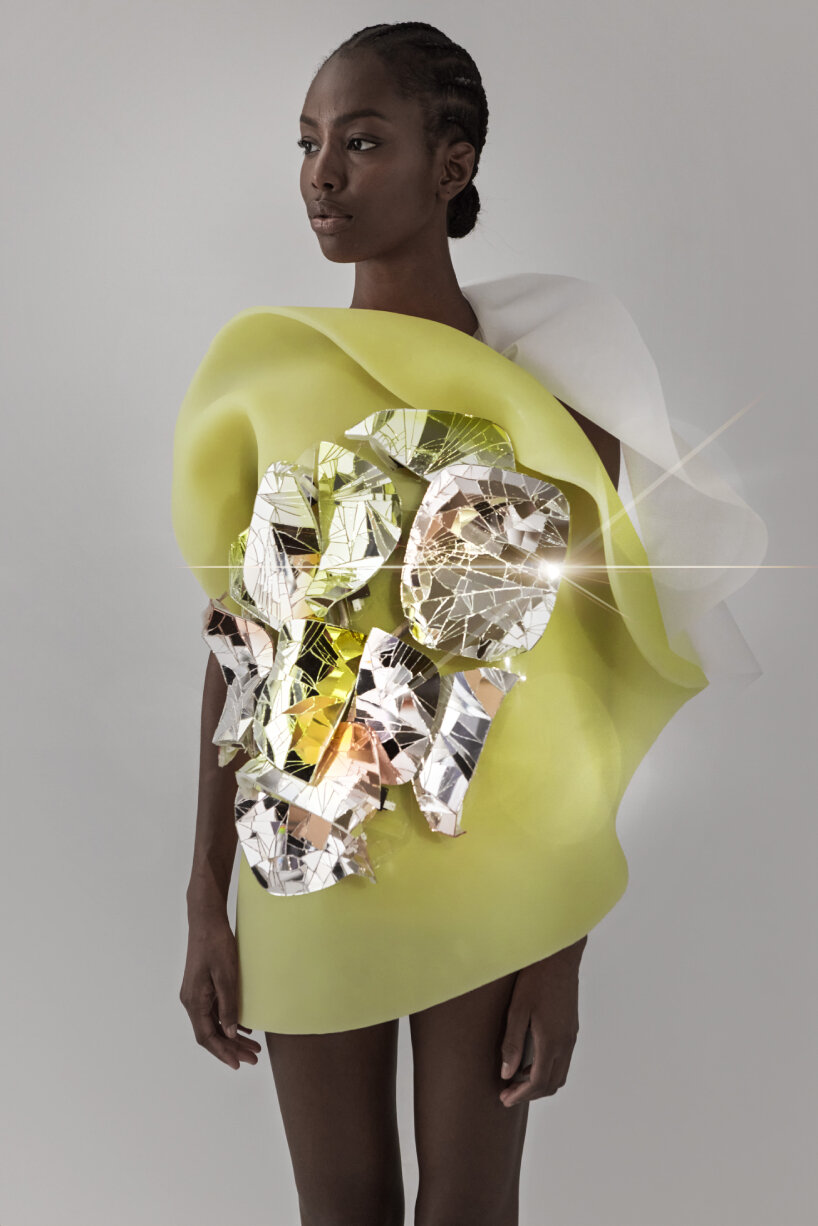
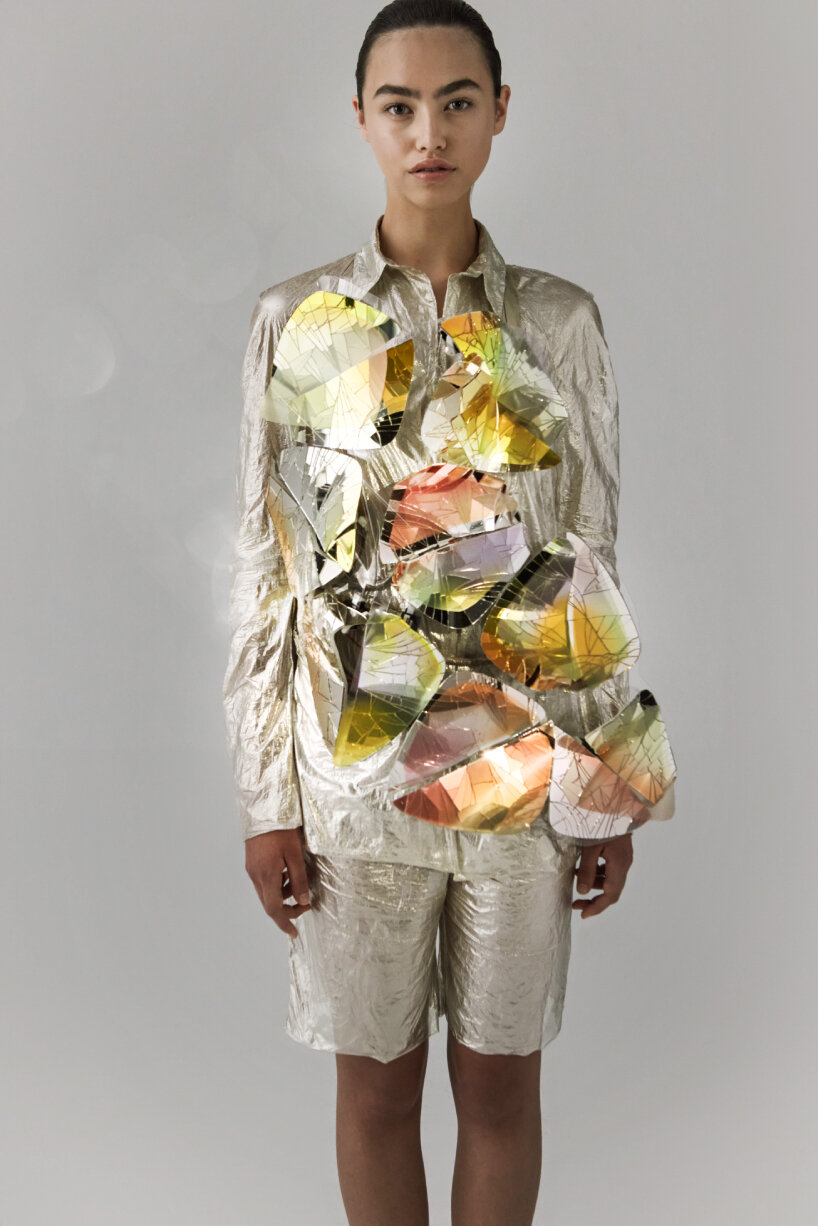
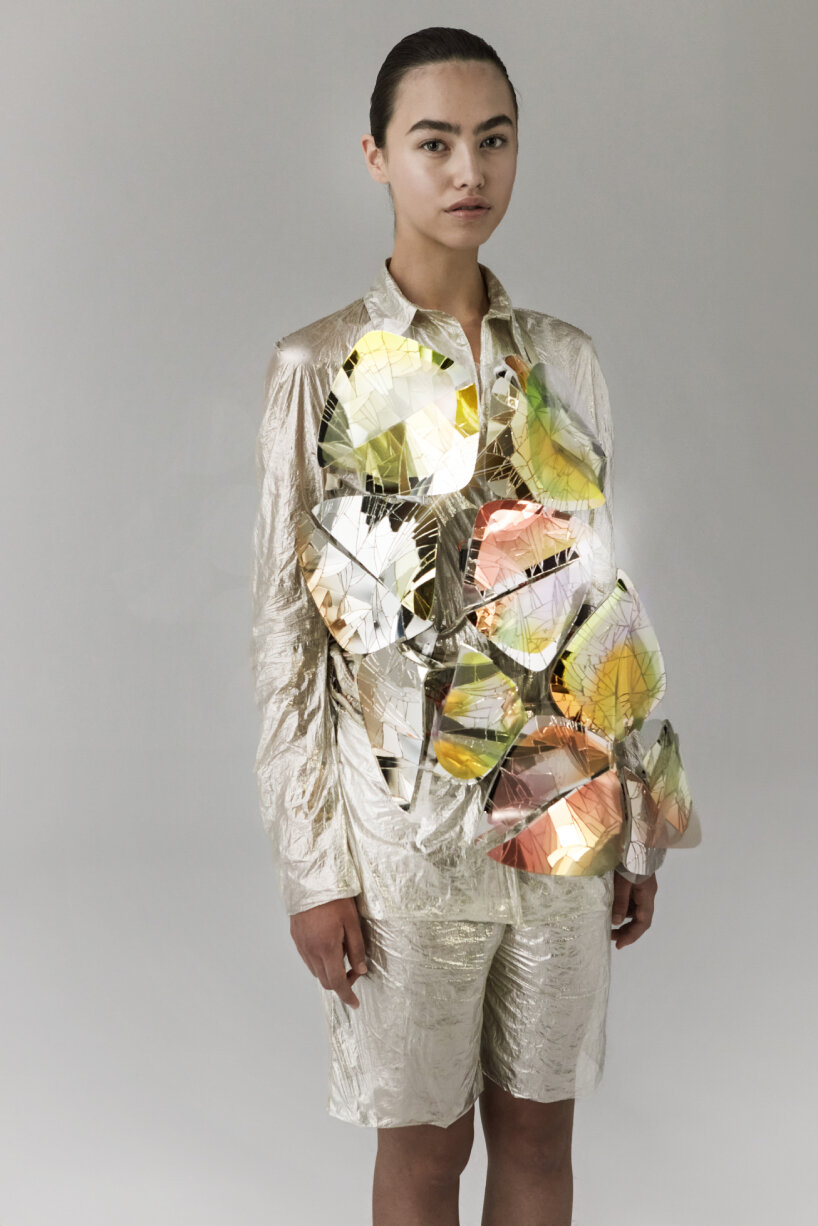
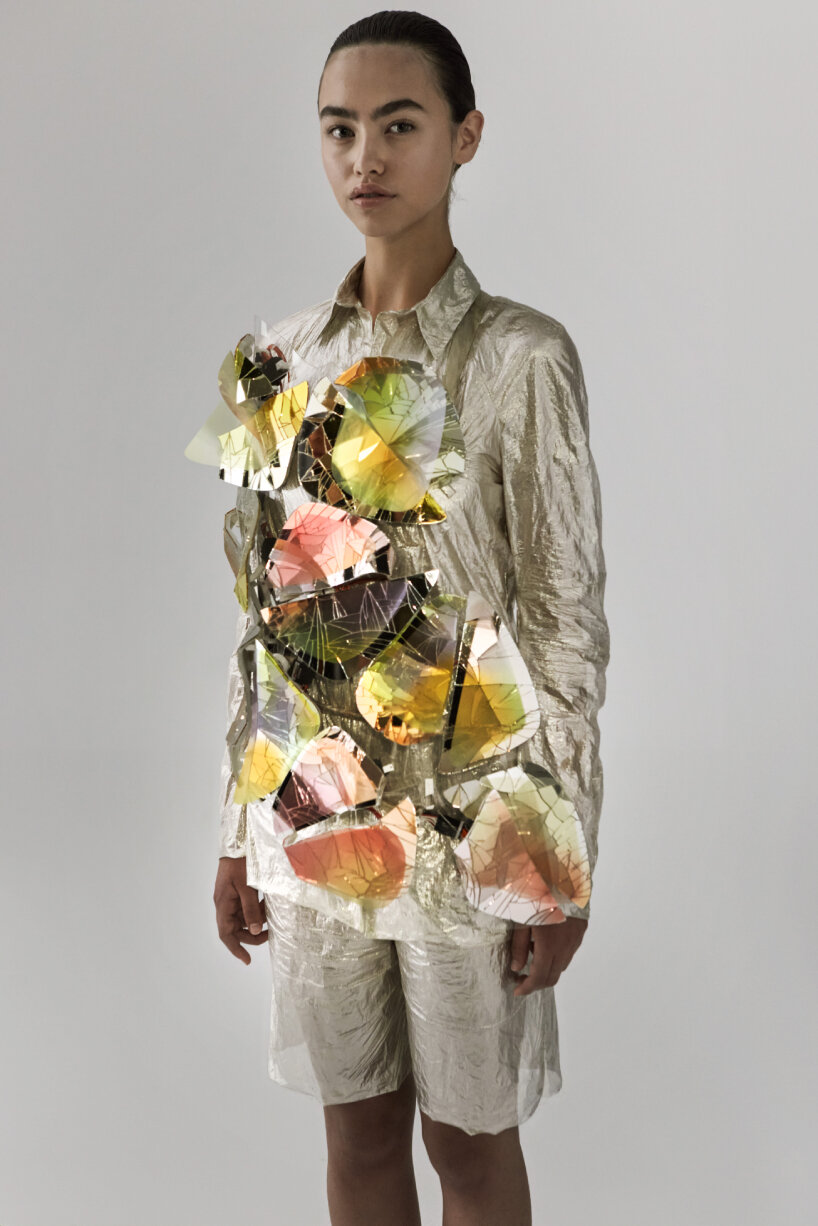
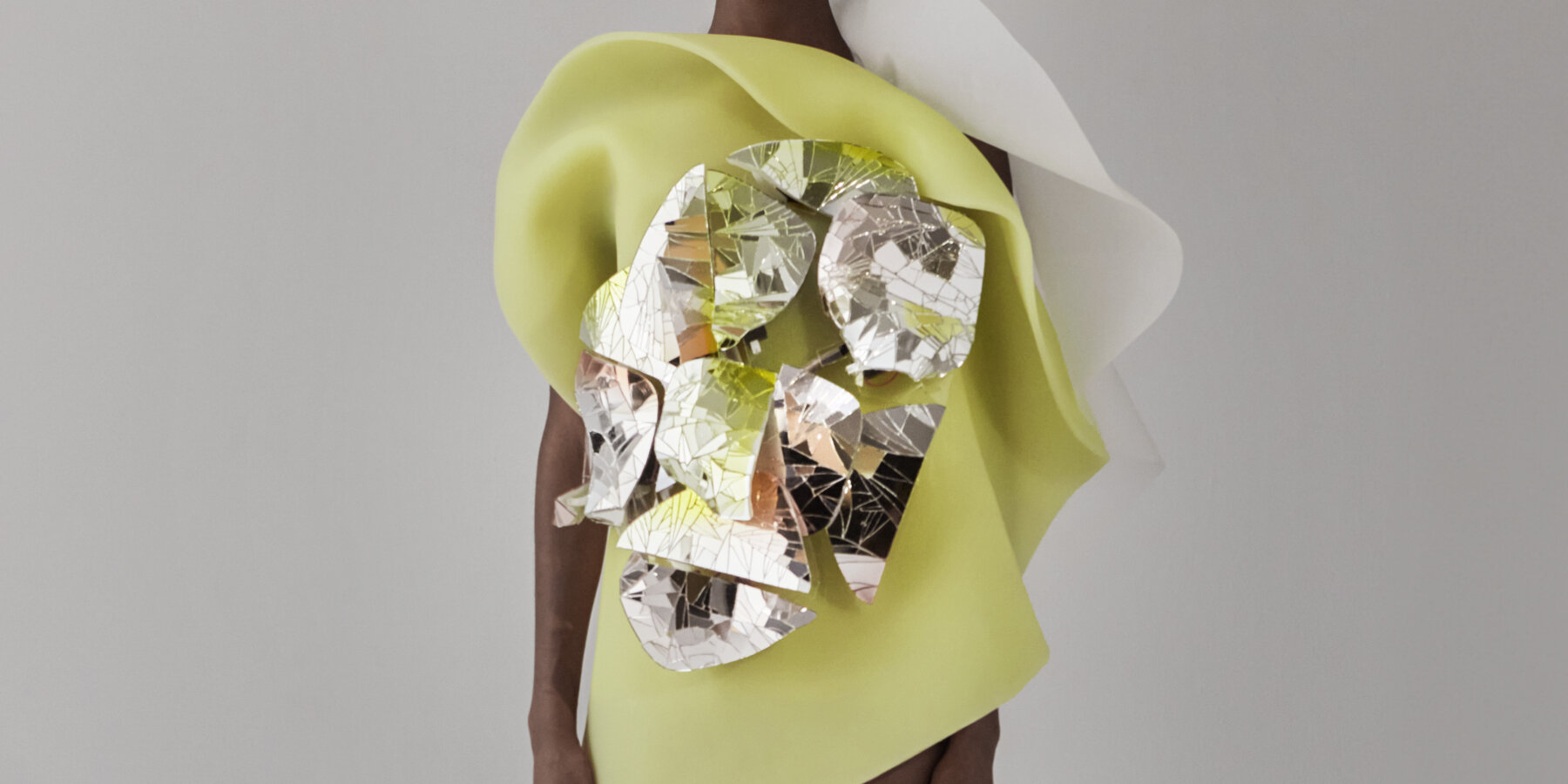
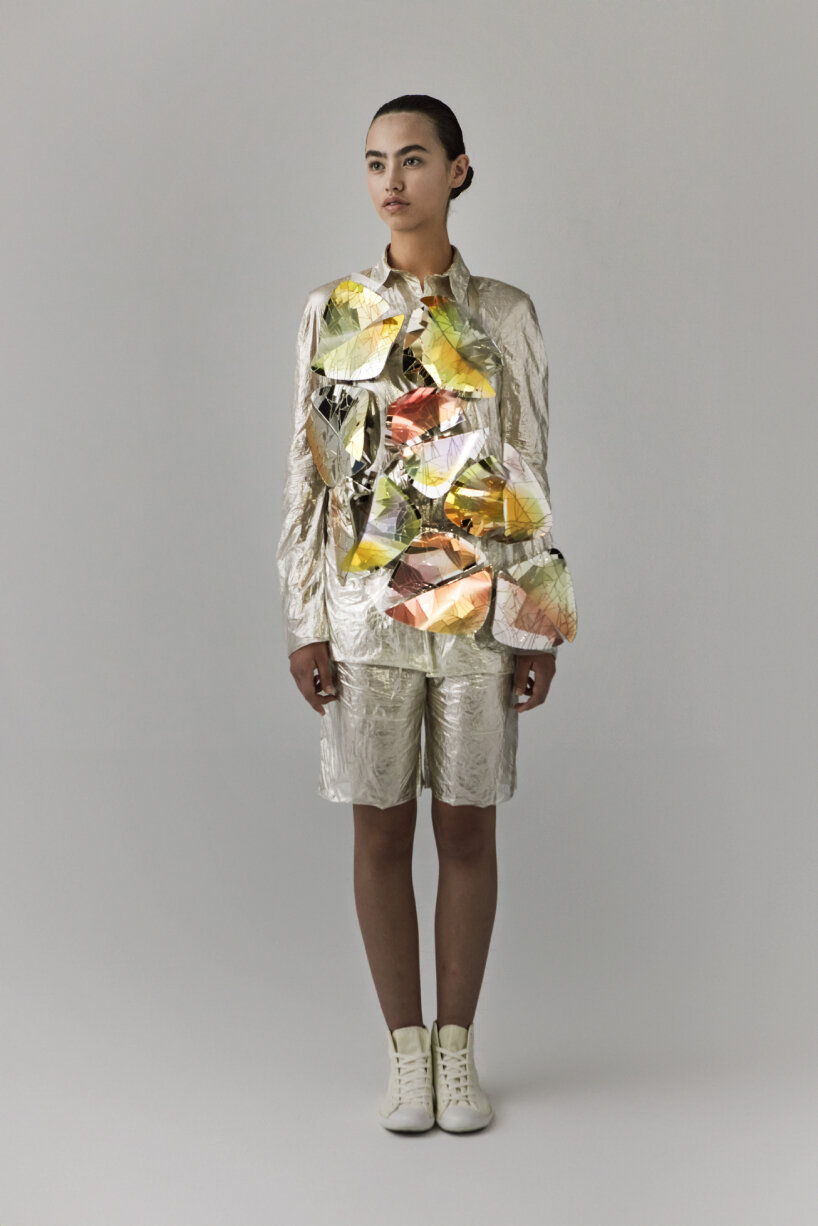
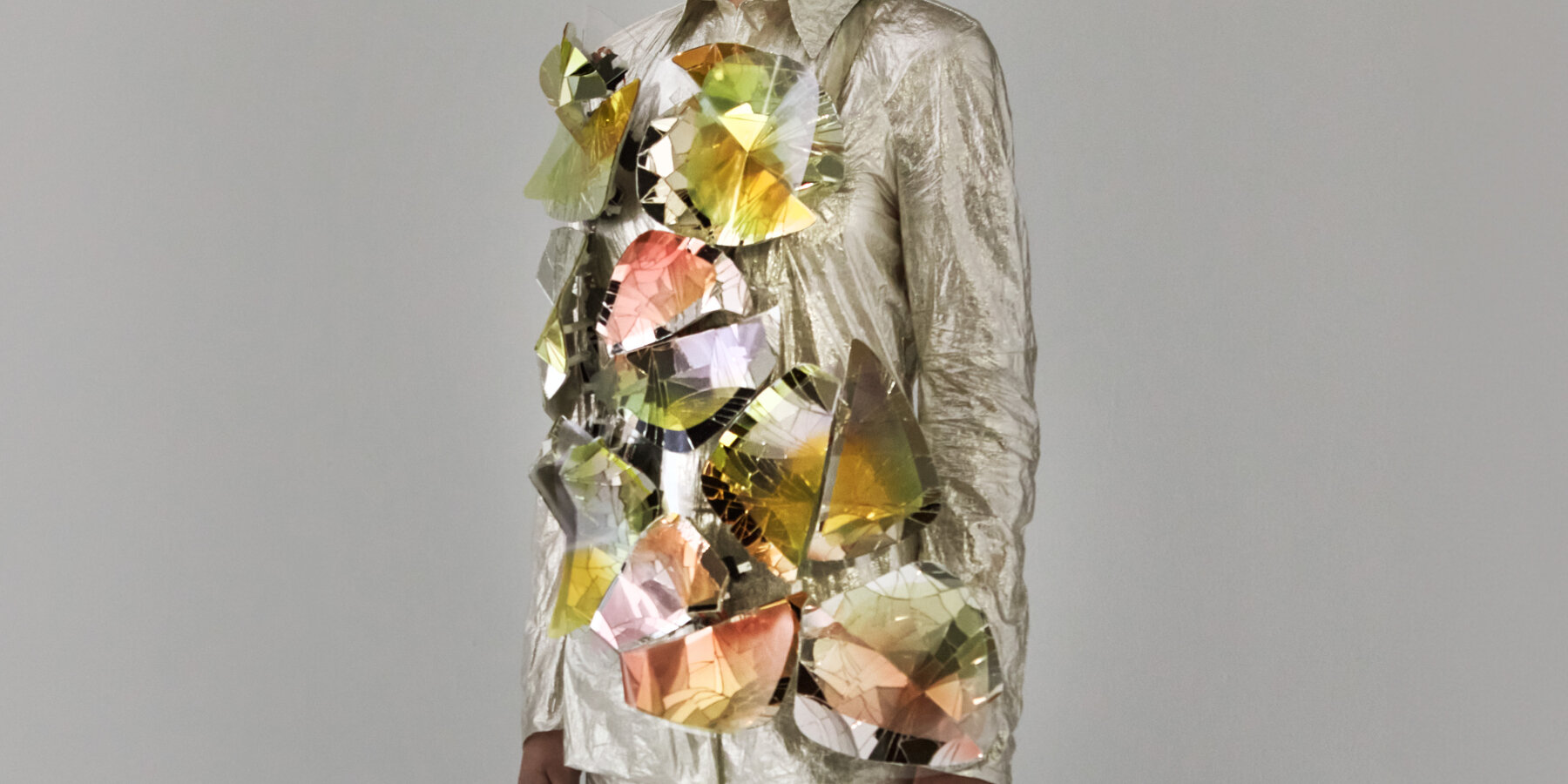
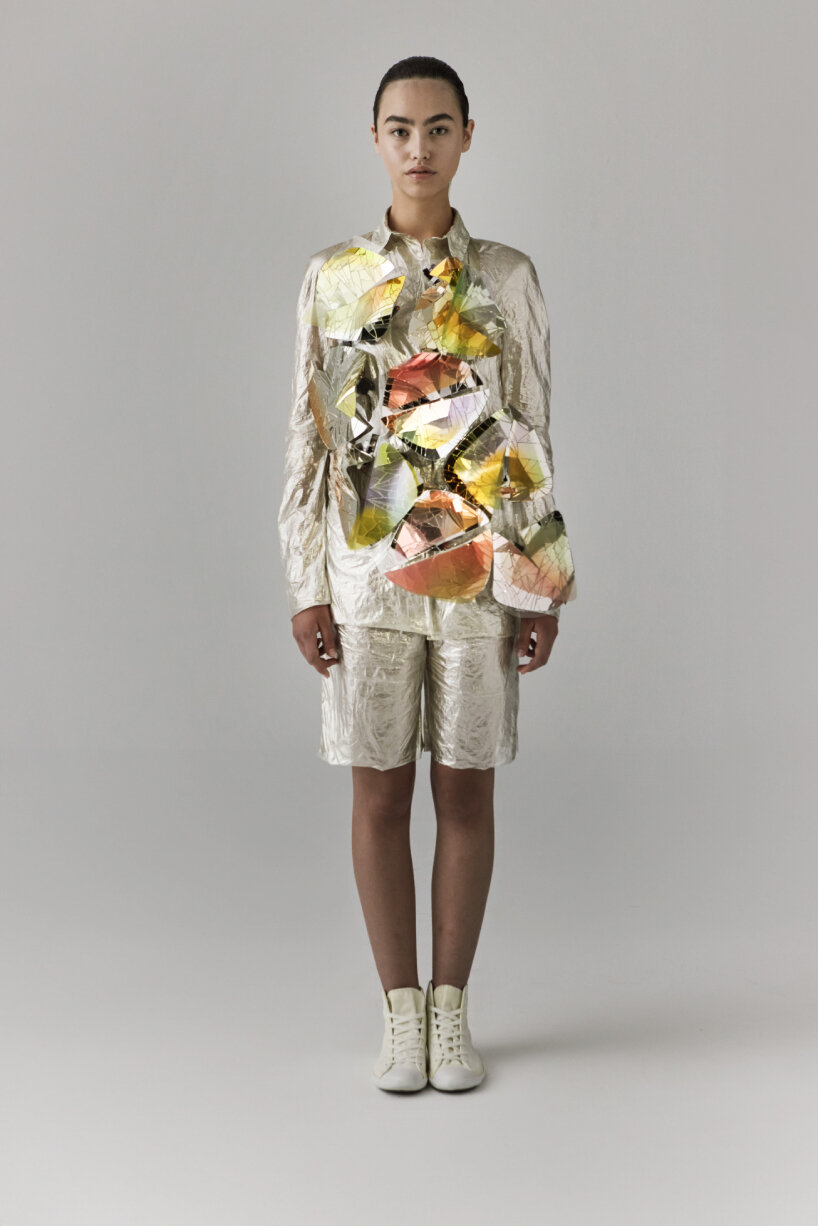
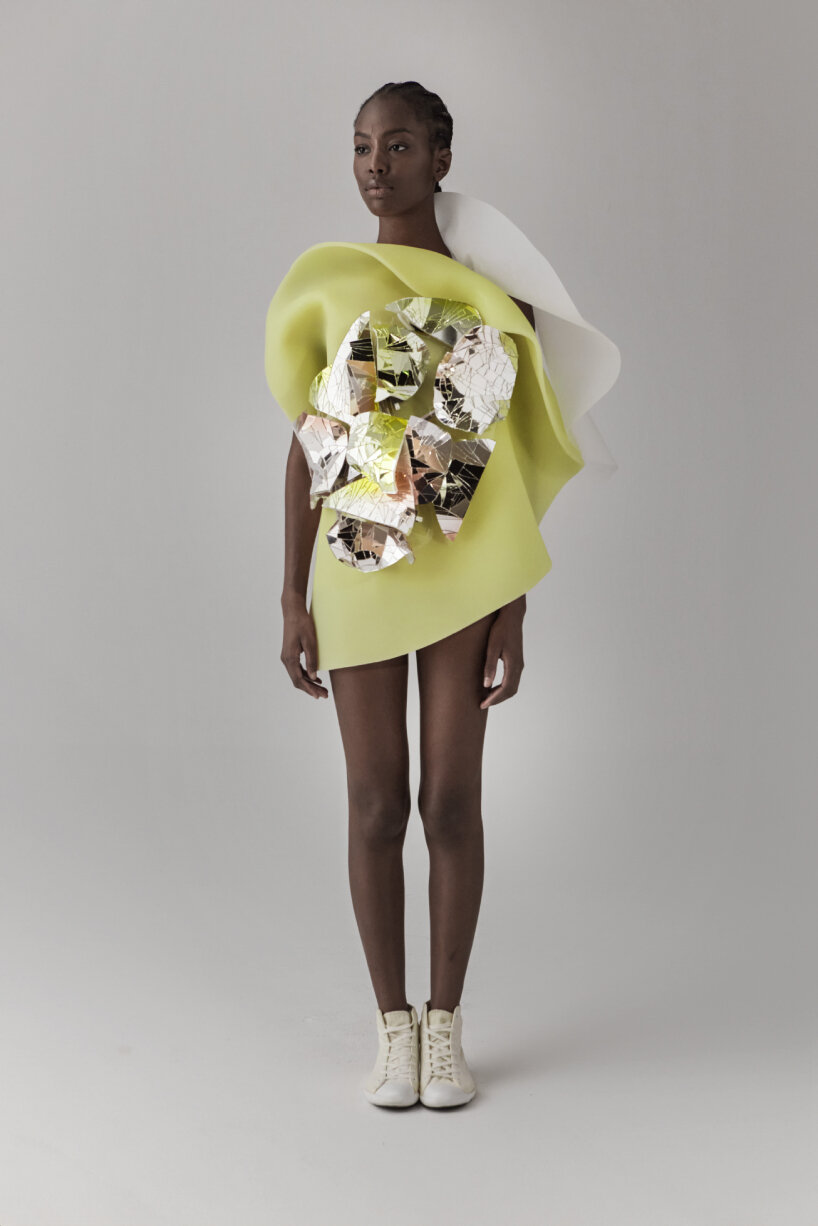
broken pieces of soft mirrors are pieced together using medical cotton gauze and 18-carat gold finishing, while the electric components installed allow them to move autonomously.
prefer designboom on google[FEATURED]
Broken mirrors dance on ying gao’s robotic clothes
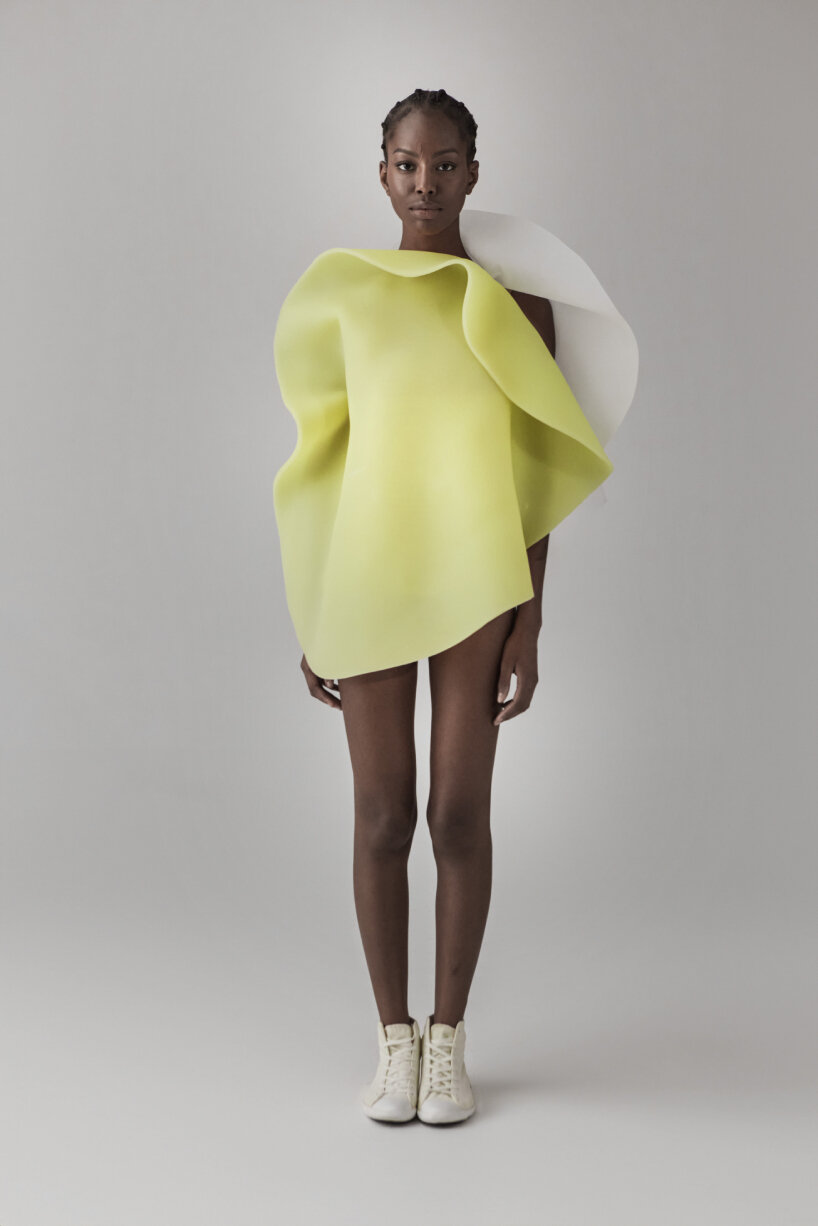
Ying Gao returns with a series of robotic clothes using shards of kaleidoscopic mirrors that flutter on their own. She pieces these broken pieces of soft mirrors together using medical cotton gauze refined with 18-carat gold finishing and sews them onto the garments. The electronic components, engineered by Simon Laroche, make these mirrors move, completing the robotic clothes. It may be the first time Ying Gao has used mirrors for her robotic clothes.
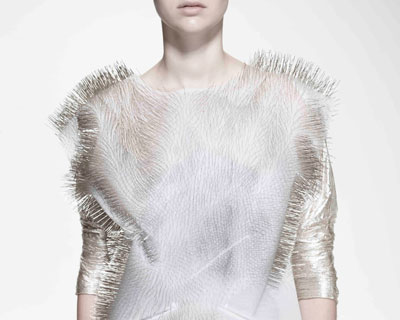
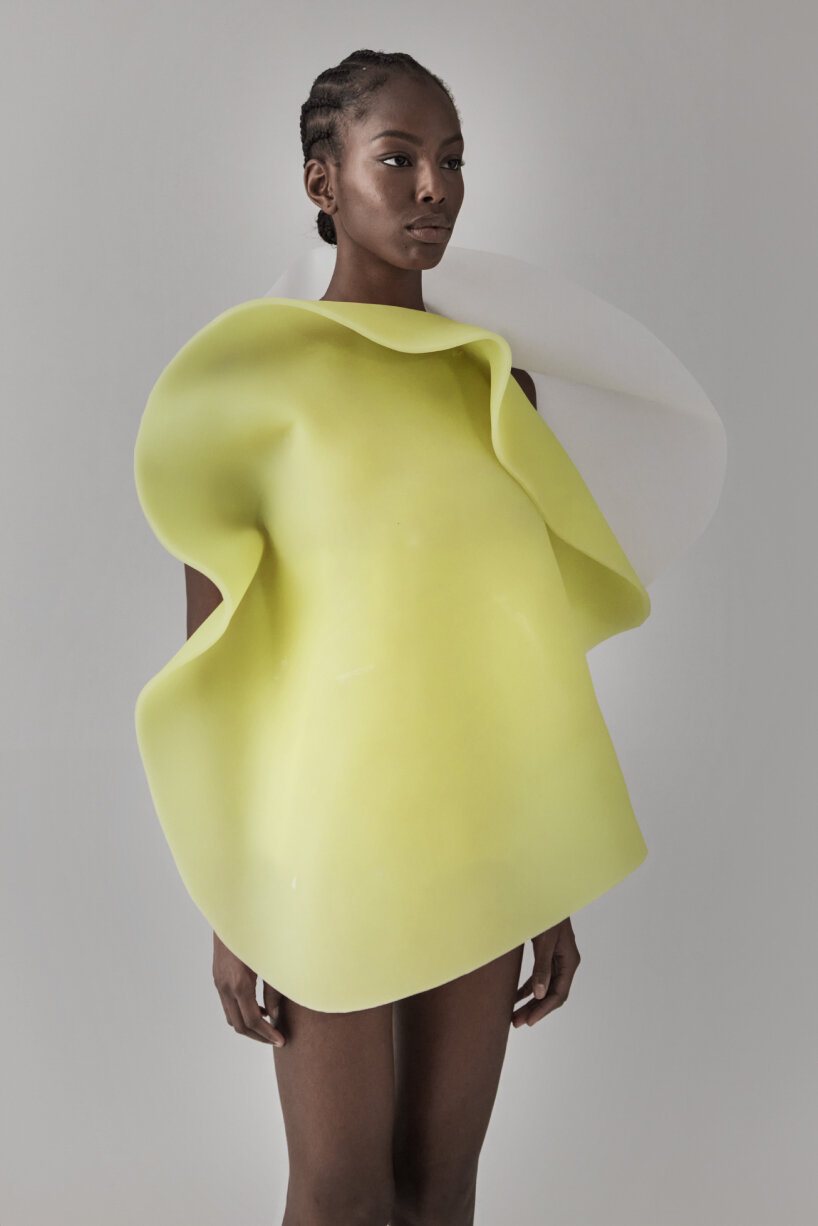
Previously, the Montreal-based fashion designer and professor has used metals and silicone, as well as camera sensors, to realize her robotic clothes. This time, she explores the idea of perfection, and what might be a better tool to present this other than broken mirrors patched together? It resembles kintsugi, or the Japanese practice of repairing broken pottery with gold. In this case, the pottery is mirrors, and maybe, they aren’t the only ones broken.
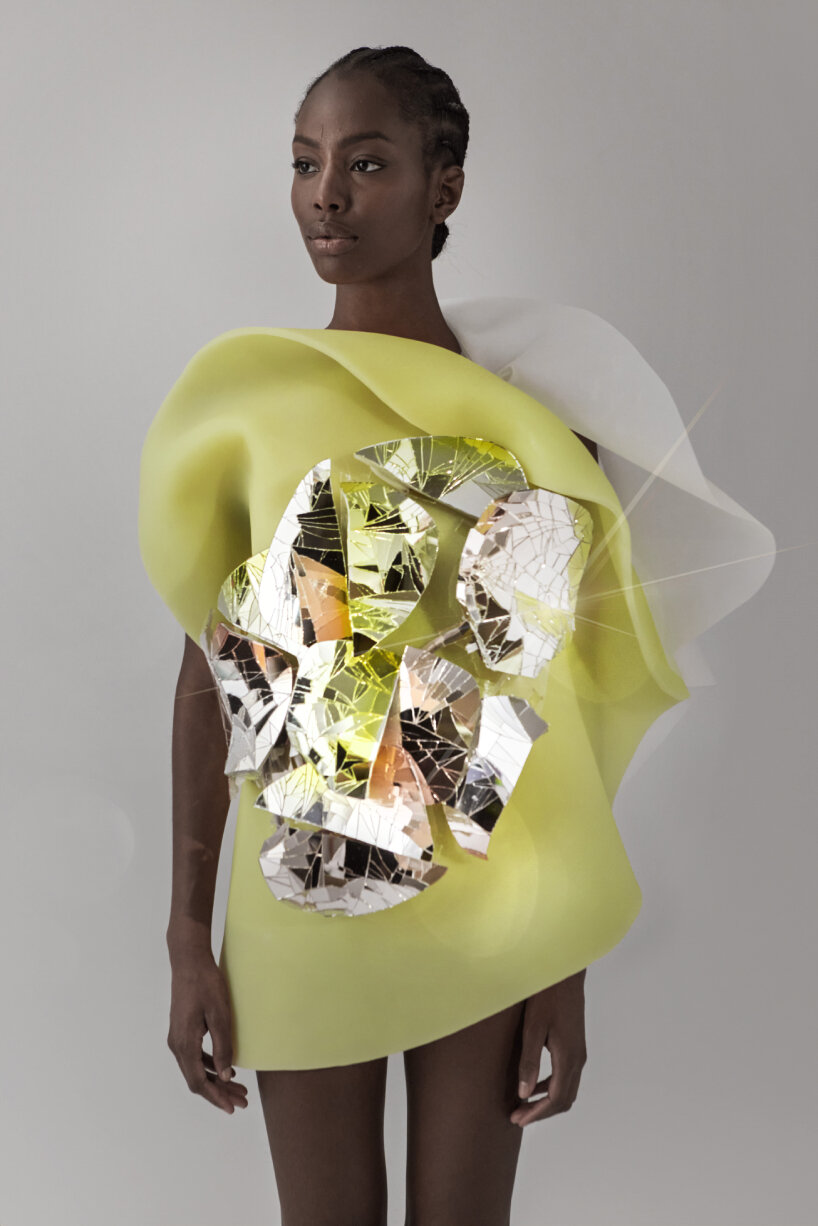
reflective surface with materials that fuse glass and silicone
For her recent robotic clothes, Ying Gao says mirrors offer a perspective on reality over truth. ‘The manifold reflections of a glassy, supple, and broken-up surface evoke an ambiguous ensemble, a reassembled reality,’ the fashion designer explains. She quotes Umberto Eco when he says that mirrors provide both an impression of virtuality and an impression of reality; we see what we want to see, and we see what we see and hide to see. By adding shards of mirrors onto her robotic clothes, the fashion designer can remind passersby of this point-of-view.
‘The mirror becomes almost intentional: it anchors itself to the movements of the person who brings it to life, its diverse reflections looking out,’ says Ying Gao. She creates a reflective surface using materials that combine glass and silicone and pairs it up with electronic components. By doing so, both the robotic clothes and the mirrors pitch the idea of a connection. It is somewhat a surface-level relationship with the viewers, but it is more of a personal association between the viewers and who they are that only them can understand. ‘The image of oneself (re)portrayed by the clothing of the other, distorted because fragmented, becomes the motif of a bipartite impression—that of the garment we are looking at, and that of the garment contemplating us,’ the fashion designer adds.
1/3
project info:
name: all mirrors
design: Ying Gao | @livingpod
robotics: Simon Laroche
photography: Malina Corpadean | @malinacorpadean
studio team: Espé Duenas, Marianne Frève, Pascale Tétrault, Ruochu Xie, Yasmin Tcheconi, Christophe Paré, Tommy Lecomte, Julien Villeneuve
director: Alexandre De Bellefeuille
editor: Guillaume Marin
cinematographer: Maxime Lapointe De Roy
first camera assistant: Luka Sanader
grip: Yvain Jeanmart
best boy: Thomas Jacquet
makeup/hair artist: Katérie Portelance of The Project
models: Sabrina Coridon of Another Species; Ophélie of Folio
shop
your own online design shop — no sales commission collected