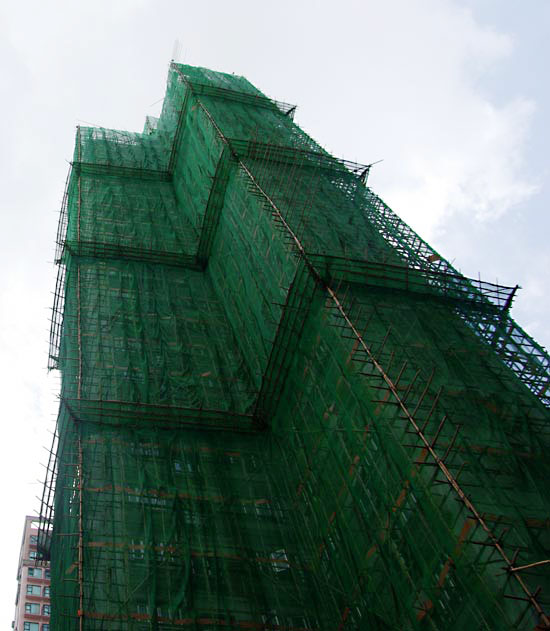
bamboo has long been used as an assembly material in china, particularly hong kong, because of its versatility. one of the most interesting applications of the wood is its structural function for scaffolding. extremely eco-friendly and cost-effective resource, it continues to be used for this purpose because it is durable enough to support the weight of builders, their equipment and materials, but is lightweight itself. unlike typical metal scaffolding, bamboo can also be cut and tailor-made to suit any contour of construction – it can be configured into a variety of shapes and follow irregular architectural features of a building, and takes very little time to build-up. it is light and easily transportable to other sites and no machinery is required to assemble the scaffold and put it in place. when one job draws to a close, bamboo can easily be recycled and used for another project.
a high-rise is encased in double-layer scaffolding image © designboom
double-layered scaffolding consists of a single outer layered scaffold and an inner layer of posts and ledgers (horizontal limber which is fastened to the vertical uprights of a scaffold) which are erected inside. between the two layers, short poles or transoms (crossbar pieces) are used to support timber planks that form working platforms.
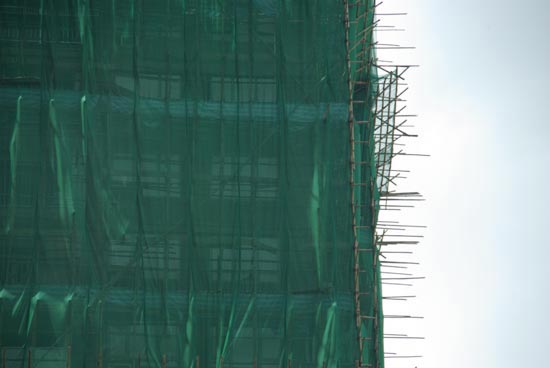 image © designboom
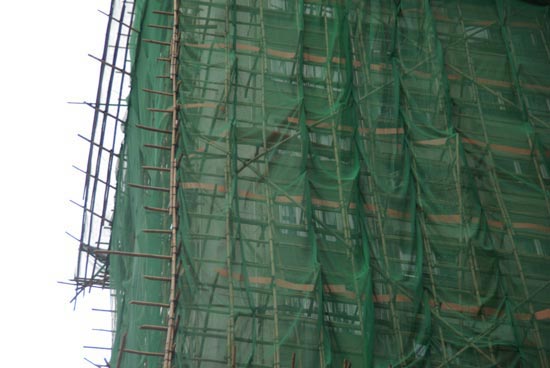 image © designboom
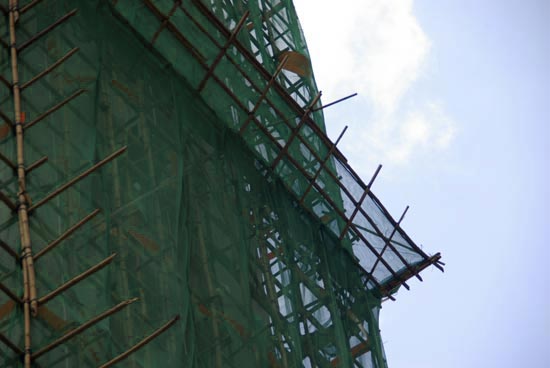 image © designboom
the main types of bamboo which are used for the purpose of scaffolding are mao jue and kao jue. when using the wood it needs to be completely dried out and free of any cracks or rot. the mao jue variety is the primary component of a scaffolding structure. it is used for vertical and diagonal members and maintains at least a 70 mm nominal external diameter. kao jue is used for vertical and horizontal members and are at least 45 mm in their external diameter.
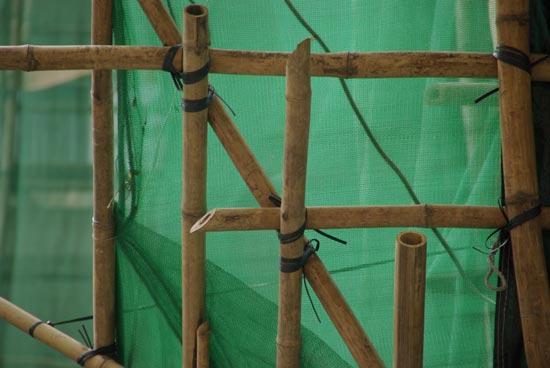 a look at the binding methods used to hold the bamboo components together image © designboom
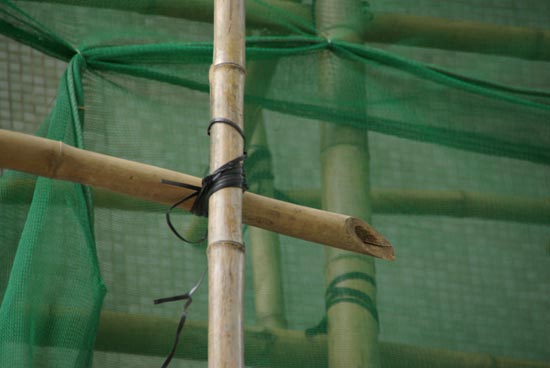 image © designboom
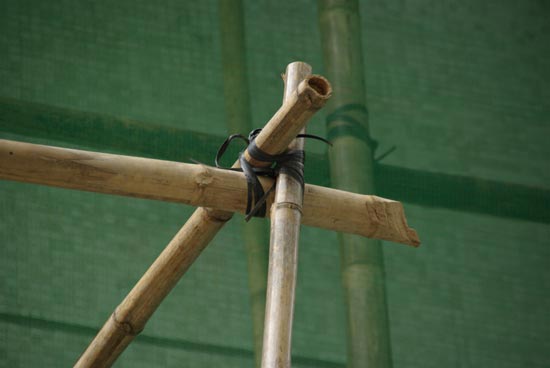 image © designboom
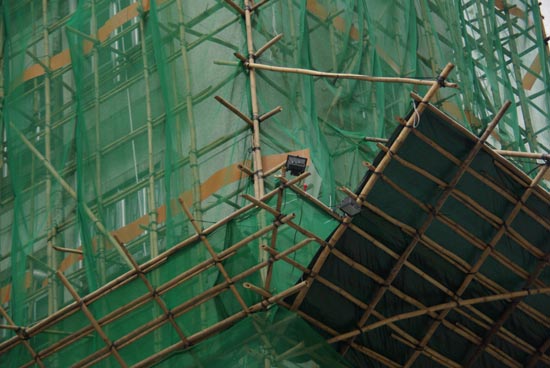 image © designboom
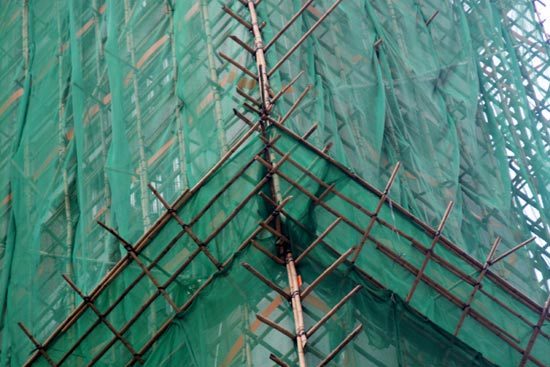 image © designboom
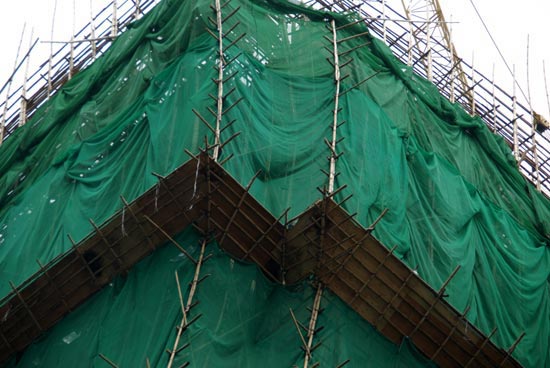 the bamboo is arranged to provide elevated stages for construction workers image © designboom
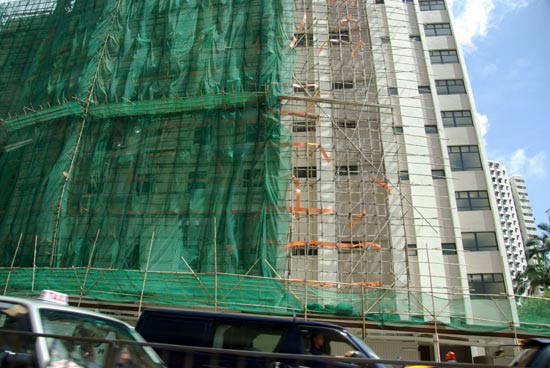 image © designboom
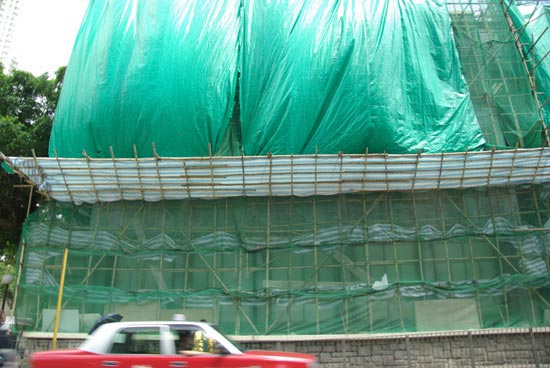 netting and nylon sheeting are used to stop debris from falling on people below image © designboom
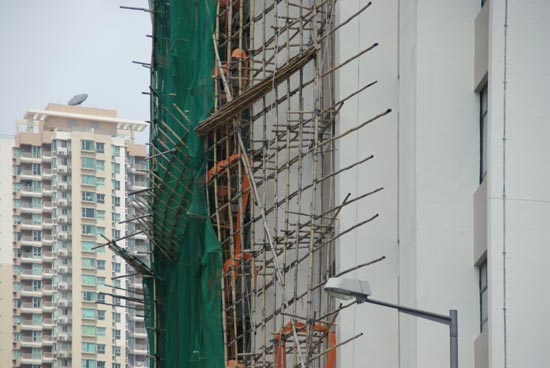 image © designboom
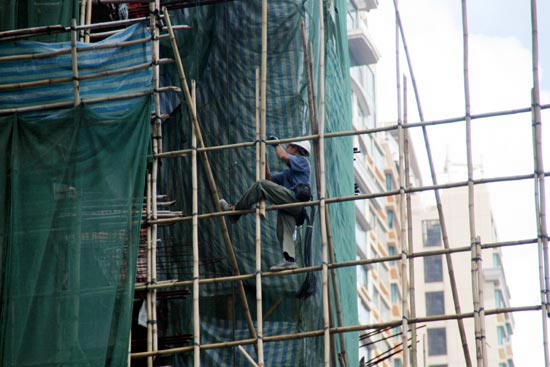 a worker climbing a grid-like assembly of bamboo image © designboom
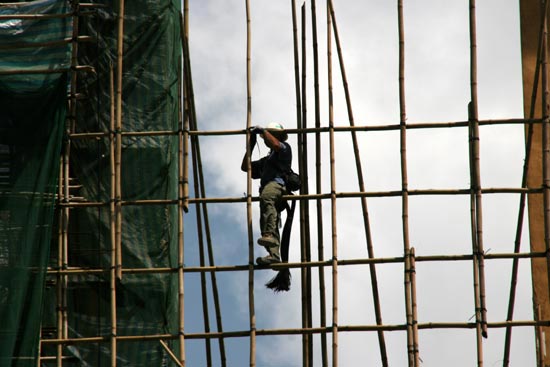 working freely image © designboom
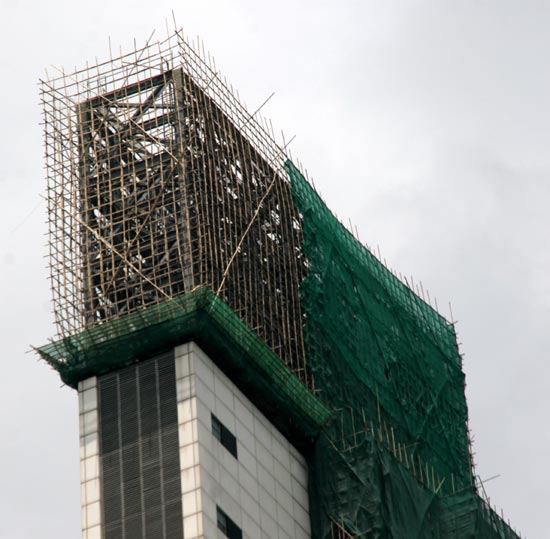 image © designboom
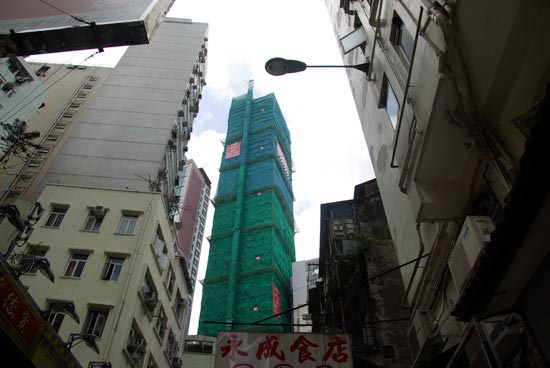 a building clad in green netting and bamboo scaffolding stands amongst the hong kong skyline image © designboom
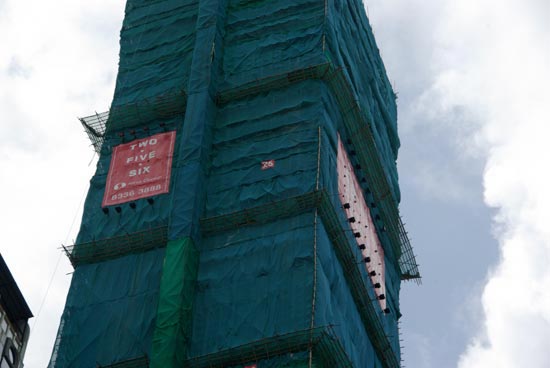 working platforms run around the circumference of a building image © designboom
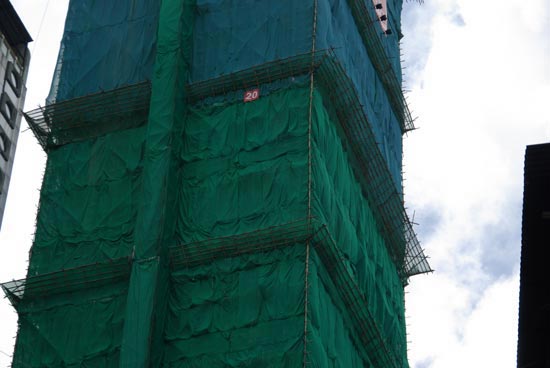 image © designboom
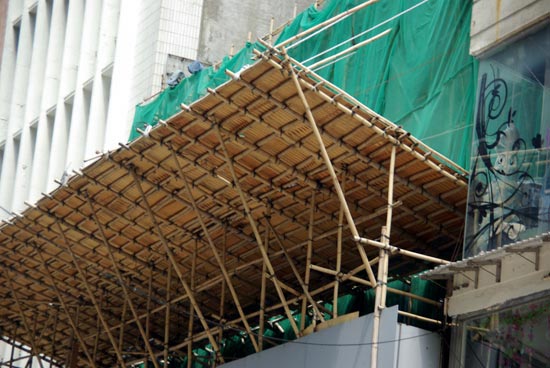 a platform extends from a building image © designboom
platform scaffolding consists of closely spaced horizontal bamboo poles that result in large working spaces for construction activities. rakers, which are inclined members, are used to reduce the number of posts needed. this means there is little obstruction to pedestrians and vehicles underneath.
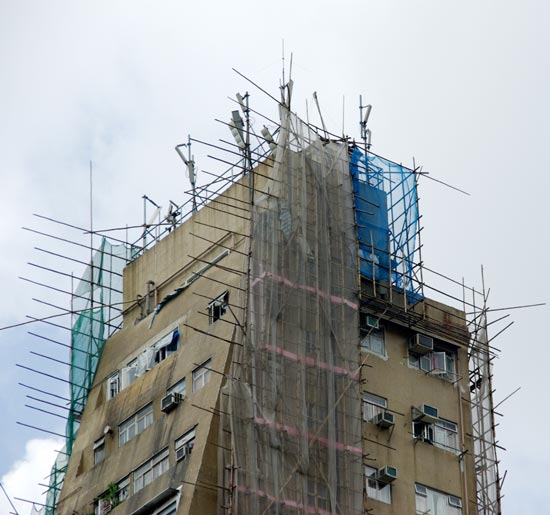 image © designboom
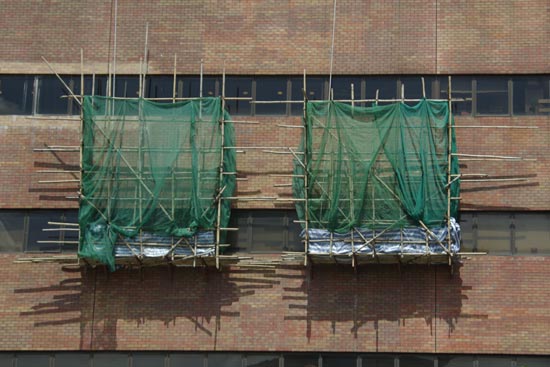 an example of truss-out scaffolding which is used for small repairs image © designboom
truss-out style scaffolding is generally used for minor work and relies on the building for support. they are used in locations where it is not practical to erect a full scaffold structure from the ground. since they are smaller and function as light duty scaffolds, kao jue bamboo is used. generally, these types of structures should be no higher than 6 metres.
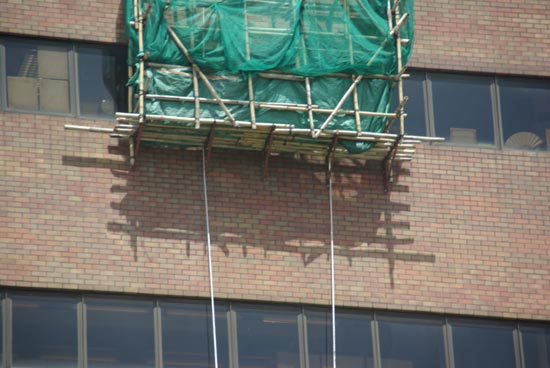 truss-out scaffolding uses the side of the building for structural support image © designboom
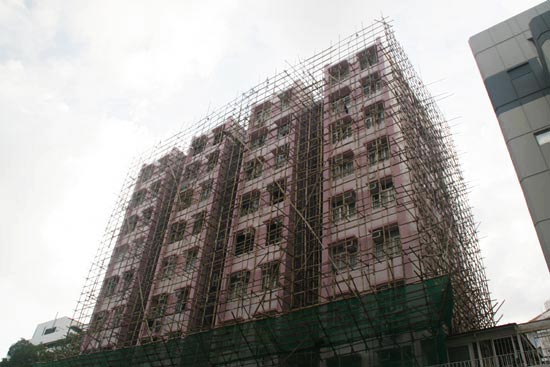 bamboo framework image © designboom
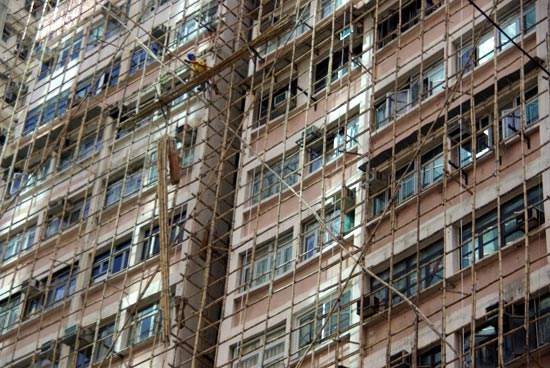 the complex framework image © designboom
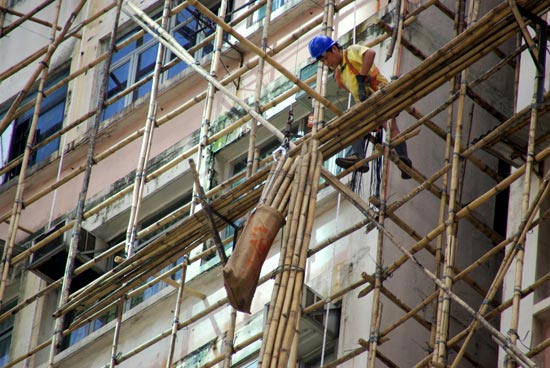 bamboo being passed up to workers via harness and sack image © designboom
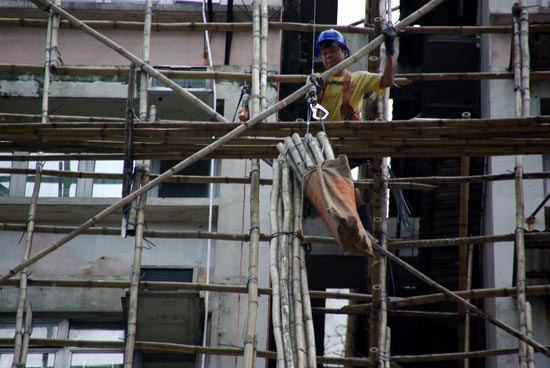 different lengths of bamboo being delivered image © designboom
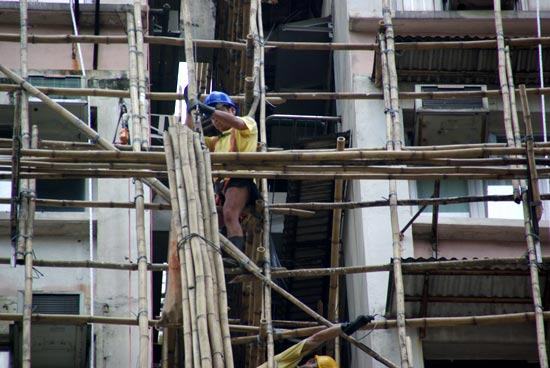 image © designboom
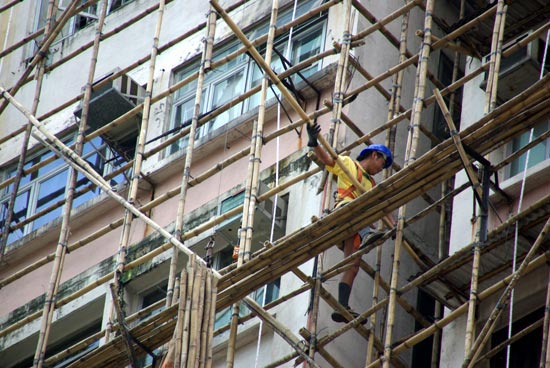 assembly continues on the double-layer scaffolding image © designboom
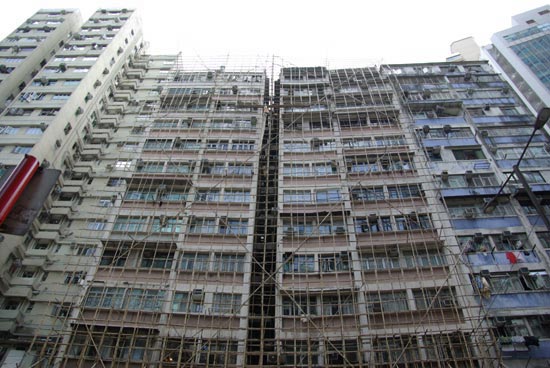 image © designboom
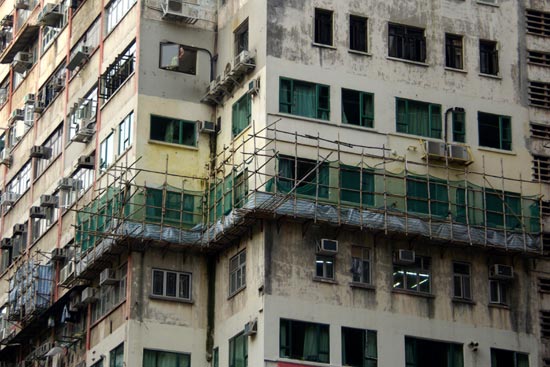 a portion of an apartment is decorated in truss-out scaffolding image © designboom
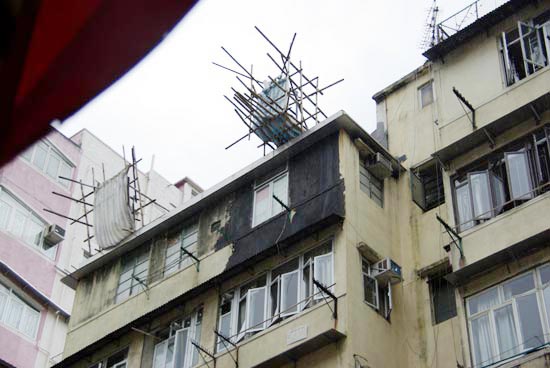 image © designboom
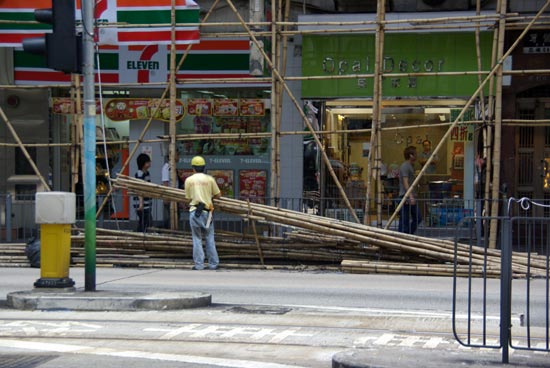 image © designboom
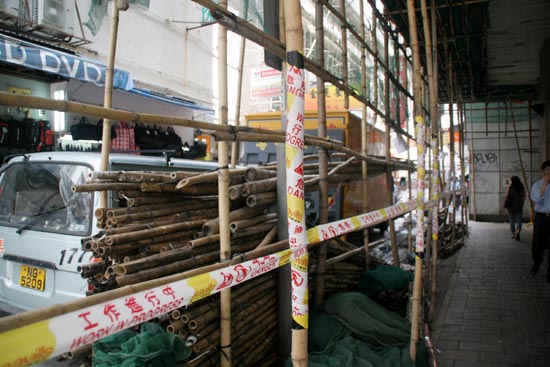 bundles of bamboo waiting to be used image © designboom
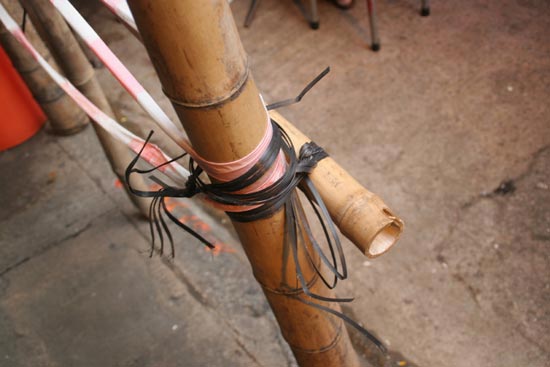 image © designboom
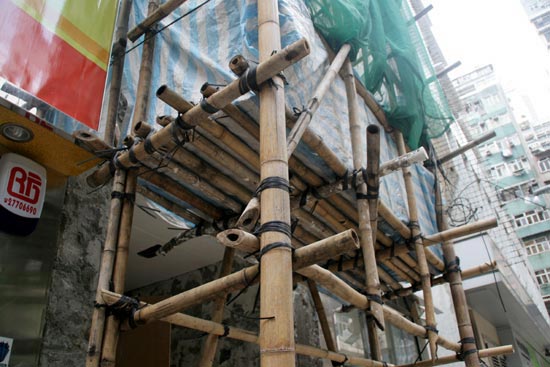 they are built in such a way to minimize obstruction to sidewalks and streets below image © designboom
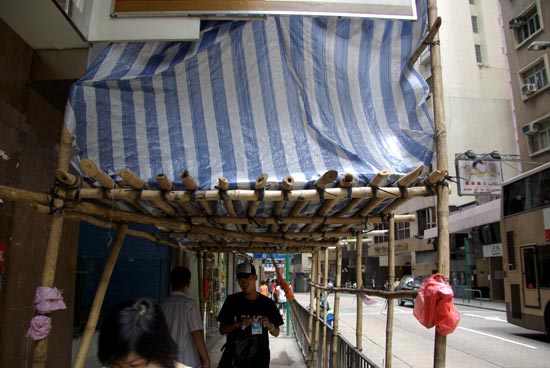 creating a canopy over the sidewalk image © designboom
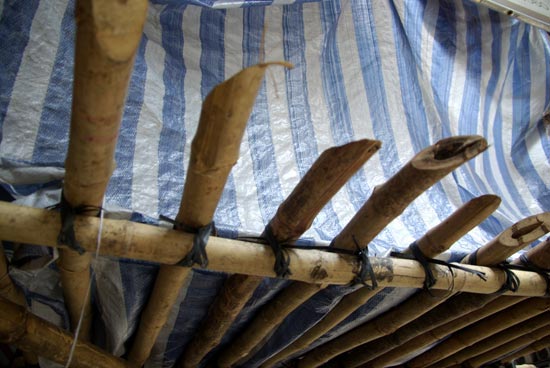 image © designboom
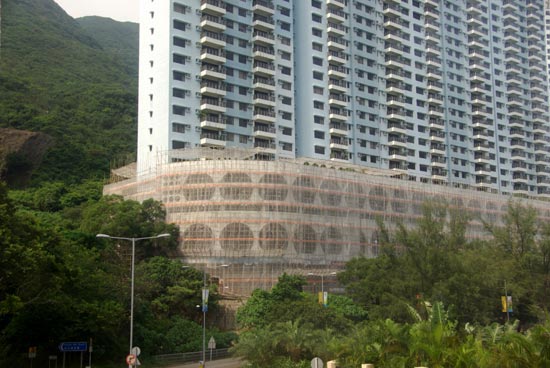 bamboo scaffolding can be adapted to different shaped buildings like this curved façade image © designboom
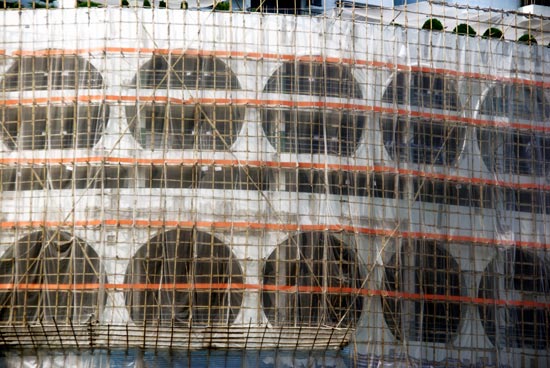 image © designboom
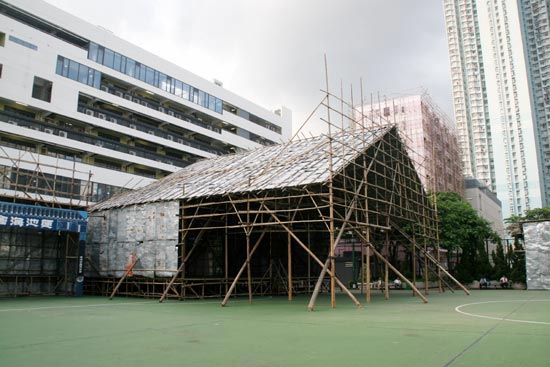 the versatile material is also used as a structural frame for houses and buildings image © designboom
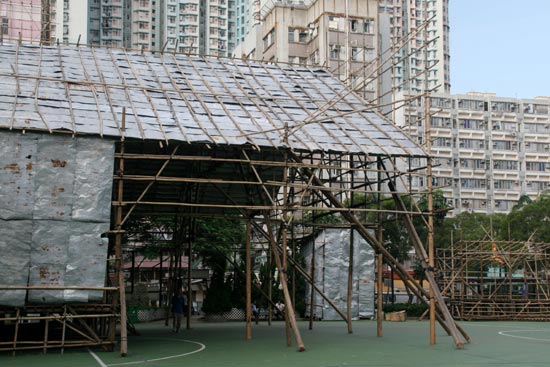 image © designboom
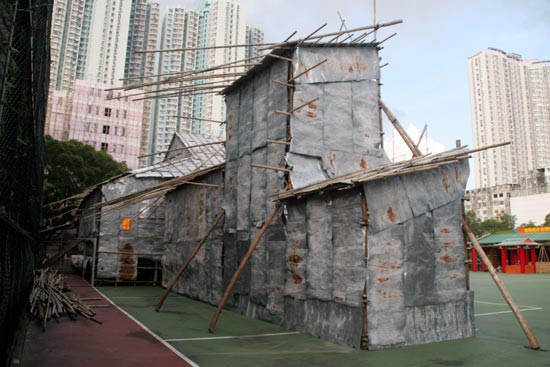 image © designboom
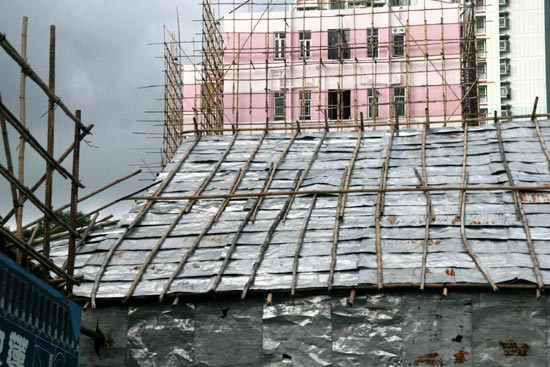 bamboo lined-up on a roof image © designboom
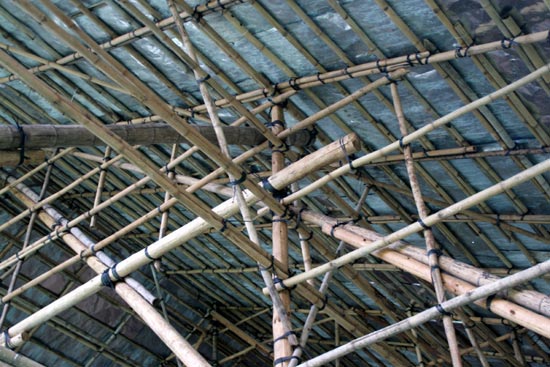 intricacy of the binding techinques image © designboom
the frequency in which these structures should be inspected should not exceed more than 14 days. they would need to be monitored more closely in the event or arrival of any tropical cyclones or strong winds. in hong kong and other parts of southern china, bamboo scaffolds are one of the few traditional building systems which have survived through the practical experiences of scaffolding practitioners over generations. thus, the safety and effectiveness of the bamboo scaffolds depends primarily on the individual skilled workers. trade knowledge is passed down to younger workers through an apprenticeship system and on-the-job learning.
architecture in hong kong (103)
 Apr 23, 2025
 Apr 22, 2025
 Mar 28, 2025
 Feb 26, 2025
 Dec 06, 2024
bamboo architecture and design (387)
 May 15, 2025
 May 14, 2025
 Apr 28, 2025 Apr 23, 2025 Apr 22, 2025
scaffolding (6)
 Sep 05, 2011
 Jun 06, 2011
 Jan 07, 2011
 Aug 22, 2010
 Jul 12, 2010
 Apr 16, 2025
 Apr 14, 2025
 Apr 08, 2025
 Apr 07, 2025