weak architects at shenzhen hong kong biennale

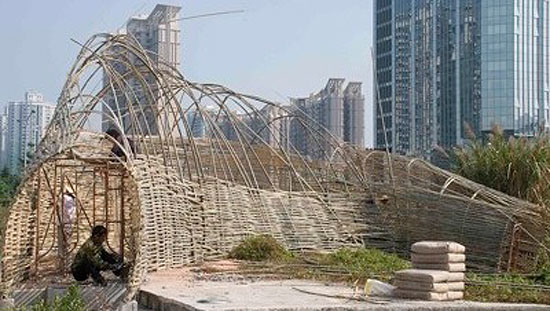
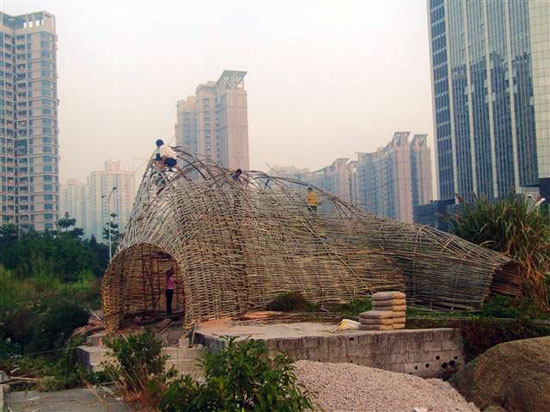
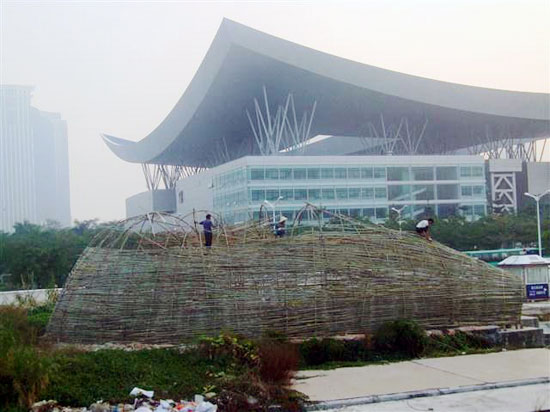
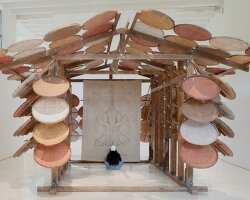
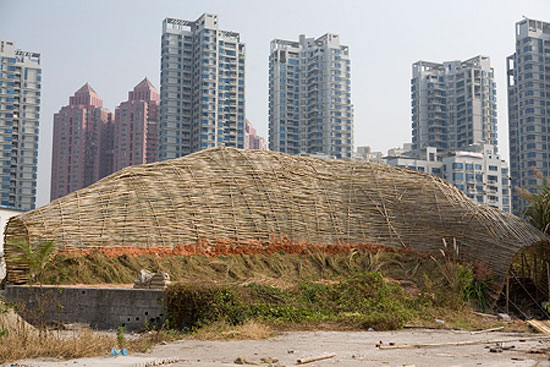
'bug dome' by WEAK! architects
images courtesy shenzhen hong kong biennale and appointed chief curator of shenzhen exhibition ou ning
for the shenzhen hong kong biennale, the taiwanese architectural group WEAK!
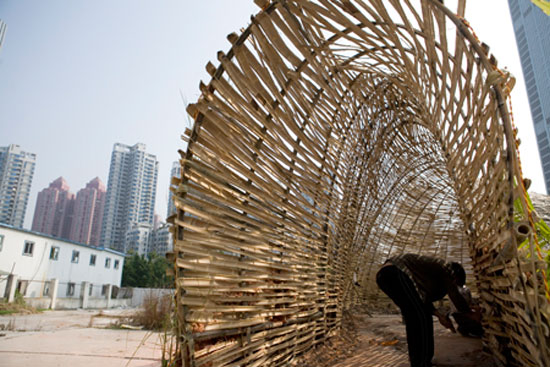
architects have created 'bug dome' and installed it on the outdoor space northeast of
the shenzhen civic center.
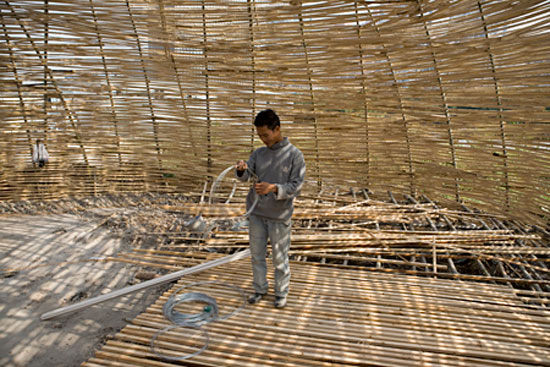
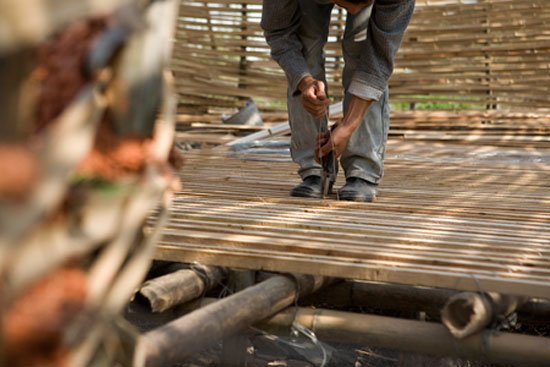
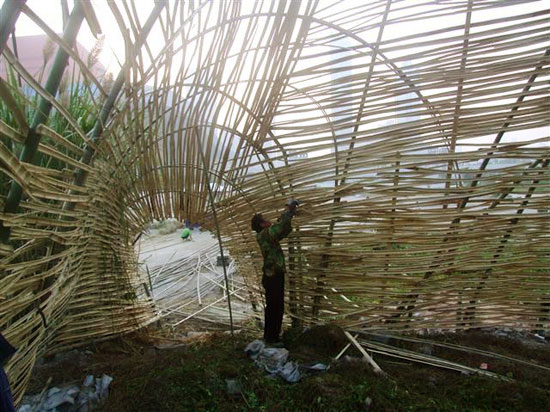
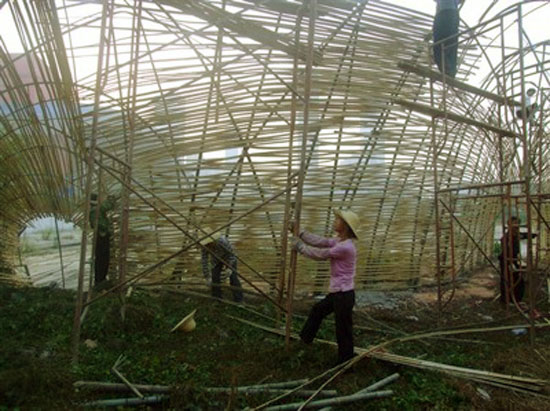
as part of the theme - 'loosing the countryside', WEAK! architects brought many workers
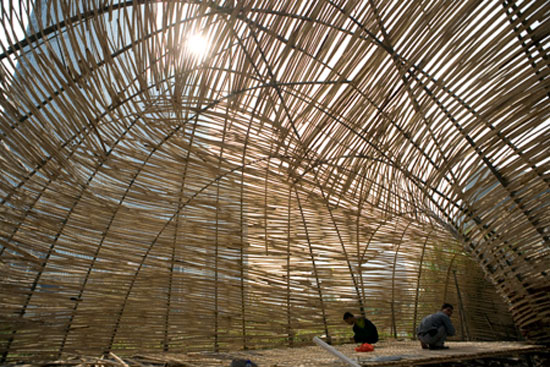
from the southern part of china for their performance. based around insects the 'bug dome'
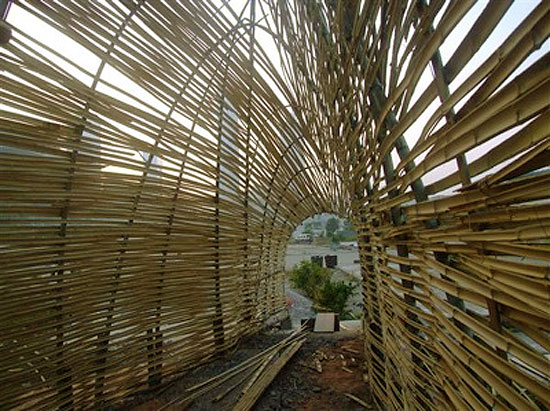
is constructed out of bamboo and weak concrete in the form of cement mixed with soil.
all the necessary materials were collected from around the building site and will return to
the natural environment after the biennale.
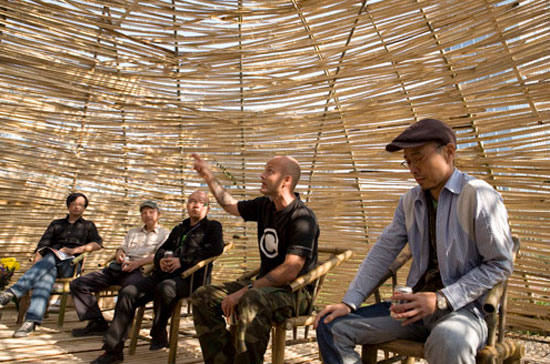
the cocoon is a temporary multi-functional architecture space, which will serve as
a workshop for children, as well as a performance area by underground bands, poetry
parties and architecture forums.
images courtesy shenzhen hong kong biennale and appointed chief curator of shenzhen exhibition ou ning

images courtesy shenzhen hong kong biennale and appointed chief curator of shenzhen exhibition ou ning

images courtesy shenzhen hong kong biennale and appointed chief curator of shenzhen exhibition ou ning

images courtesy shenzhen hong kong biennale and appointed chief curator of shenzhen exhibition ou ning

images courtesy shenzhen hong kong biennale and appointed chief curator of shenzhen exhibition ou ning

images courtesy shenzhen hong kong biennale and appointed chief curator of shenzhen exhibition ou ning

images courtesy shenzhen hong kong biennale and appointed chief curator of shenzhen exhibition ou ning

images courtesy shenzhen hong kong biennale and appointed chief curator of shenzhen exhibition ou ning

images courtesy shenzhen hong kong biennale and appointed chief curator of shenzhen exhibition ou ning

images courtesy shenzhen hong kong biennale and appointed chief curator of shenzhen exhibition ou ning

images courtesy shenzhen hong kong biennale and appointed chief curator of shenzhen exhibition ou ning

images courtesy shenzhen hong kong biennale and appointed chief curator of shenzhen exhibition ou ning

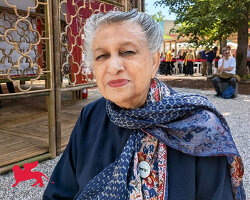
hsieh ying-chun, marco casagrande and ching-yueh roan of WEAK! architects
images courtesy shenzhen hong kong biennale and appointed chief curator of shenzhen exhibition ou ning
WEAK! architects recompose existing materials with minimal effort to total impact.
they describe themselves as 'lazy' and 'flexible'. they co-operate with children and grandmothers.
WEAK! are hsieh ying-chun (taiwan architectural activist specializing at collaborative
construction and sustainable construction), roan ching-yueh (architect, curator and critic)
and marco casagrande (finnish architect, founder of C - lab).

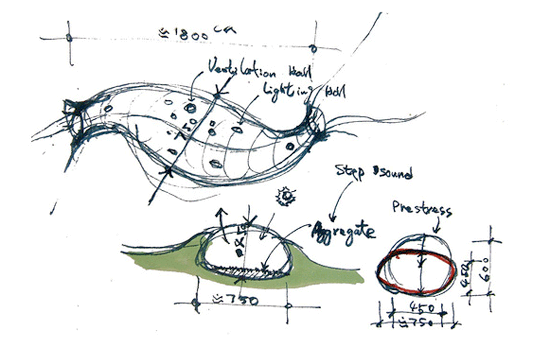
initial sketches of the 'bug dome'
images courtesy shenzhen hong kong biennale and appointed chief curator of shenzhen exhibition ou ning
the traditional hut and the industrial area - like
time travel.
The WEAK!
Architects:
Hsieh Ying-chun 謝英俊
Marco Casagrande
Roan Ching-yueh
Construction Work:
Chen, Jiang Zhou, Leo Cheng, Marco Casagrande, Nikita Wu, Shao Lei, Wei Jia-kuan, Wei Jing-Ke
Design Assistant:
Frank Chen
Local Knowledge:
Wei Jia-kuan
Wei Jing-Ke
Location: Shenzhen, China
Site: 3000 m2 waste land, ruined building site
Building footprint: 120 m2
Materials: bamboo, wood, gravel, recycled concrete
Completed: 2009
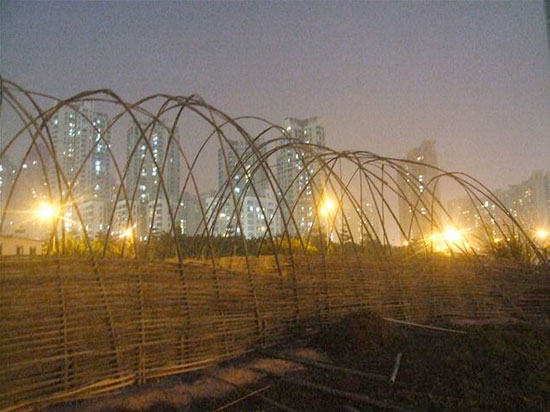
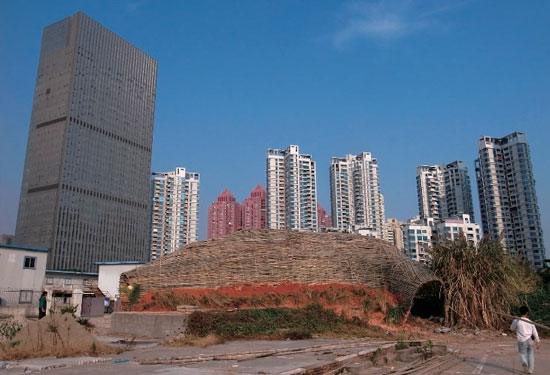
The building is realized on a wasteland of a ruined building site in-between the Shenzhen City Hall and an illegal workers camp. The design is inspired by insects. The bamboo construction methods are based on local knowledge from rural Guanxi.
The space is used during the SZHK Biennale for underground bands, poetry reading, discussions, karaoke and as a lounge for illegal workers. The building offers a shade, a stage and a fireplace. After the Biennale the Bug Dome will act as an illegal social club for illegal workers from the Chinese countryside.
The building is weak, flexible and improvised to meet the site-specific conditions. The architectural control has been given up in order to let the nature step in. The construction is a result of participatory planning between the designers, construction workers and local knowledge.
The cocoon is a weak retreat for the modern man to escape from the strength of the exploding urbanism in the heart of Shenzhen. It is a shelter to protect the industrial insects from the elements of un-nature.
When the fire is up a society is born again. One has to take the liberty to travel a thousand years back in order to realize that the things are the same.
Let everything that has been planned come true.
Let them believe. And let them have a laugh at their passions. Because what they call passion actually is not some emotional energy but just a friction between their souls and the outside world.
And most important: let them believe in themselves. Let them be helpless like children, because: weakness is a great thing and strength is nothing.
- “Stalker”, Anrei Tarkovsky
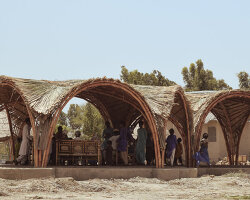
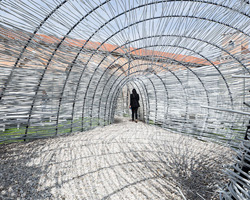
Their project here is formally interesting, forming a loosely woven shell amenable to both open air performances and more casual social activities along the lines of Hsieh Ying-Chun’s former projects with tent-based amphitheaters in suburban Taipei. Its shape recalls a partially submerged cicada skin, semi-translucent and emerging organically from the ground. It is constructed of solid bamboo ribs shaped into arches perpendicular to the length of the sculpture, while thinner strips of bamboo are woven between these ribs. Broken bricks and mud lend support like primitive buttresses. Although it is physically possible to enter from either end, one side houses a flat stage, and the remaining ground surface is covered with small stones that conceal upward-facing electric lights. The structure is immediately placed on an overgrown construction site immediately abutting a residential camp for temporary workers, but the skyscrapers and official municipal buildings of Shenzhen are visible on the remaining three sides.
I first experienced the “Bug Dome” one day before the official opening, when project curator Xu Ya-Zhu invited the Taiwanese participants in the biennale to host a small event in and around the structure. Unfortunately Hong Kong poets Liang Wendao and Liu Wai Tong did not make it in time for their scheduled readings, so instead a discussion with the architects was held on the makeshift stage. The ensuing conversation strayed quite far from the subtle aesthetic ambiguities of the project itself, and several participants proceeded to negate the urban experience with an at times naive and utopian tirade on the merits of rural communities. Notably, Roan Ching-Yueh mentioned that architecture has no reason to become remain as complicated as it has become, that civilization did not appear out of a vacuum in the early 20th century, and that there is no reason to pay the government to dispose of our waste.
All three of these architects deserve the utmost respect for their suspicion of breakneck urbanization and Futurist urbanism, and even more so for their willingness to work with vernacular materials and styles in the service of disadvantaged rural communities. Some of their projects, including Marco Casagrande’s work on the Treasure Hill area in Taipei, have been absolutely groundbreaking in terms of how we think about the limits of growth for the Chinese cities of the future. But an inability to accept multiple planes of construction and levels of systemic integration is simply futile. The “Bug Dome” successfully negotiates the territory between the construction, metropolitan architecture, and rural past of Shenzhen, but it is not a habitable structure. It would be foolish to claim that this kind of work could represent any kind of solution–even theoretical–to the problems facing south China.
Thankfully, the architects also distributed a broadsheet paper called “Cicada” during the opening days of the biennale. The textual and visual materials contained therein lay out the discursive basis for these projects sensibly and realistically, a far cry from the rhetoric that led me to all but dismiss the pavilion during that opening event. In this conception, “weakness” is a form of architecture based on insect construction, rejecting engineering in favor of a bricolage that collects debris from around the site for its structural materials. In a remarkable conceptual move, the figure of the ruin is viewed as a form of third-generation urbanism in which the man-made is integrated into natural systems.
WEAK! projects are thus paradoxical attempts at the design of ruins. In another project, the “Post-Industrial Fleet,” decommisioned commercial ships are berthed outside of Tianjin and inhabited as units for residence, recreation, and survival. What is at stake here is often the scale of the design of systems: although Roan Ching-Yueh may have overstated his case when he claimed that there is never a need to choose the “big system” over the “little system,” this is indeed a category of analysis to which more attention needs to be paid. This is something akin to open-source architecture, consisting of shanzhai hardware components that can be remixed and recombined according to the exigencies of the moment. In southern China, there may be no other way.
http://kunsthallekowloon.org/archives/111
Robin Beckham?
shenzhen & hong kong biennale of urbanism
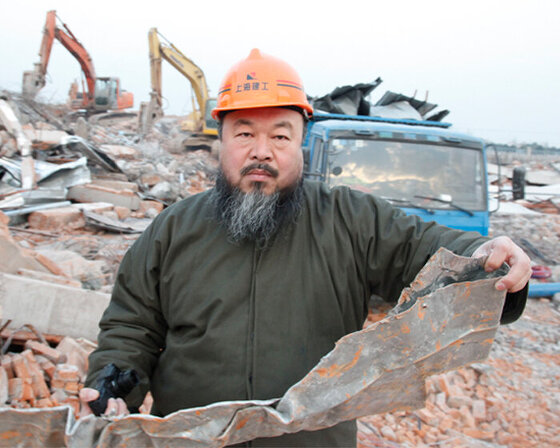
terence riley has been appointed chief curator for the 2011 shenzhen & hong kong bi-city biennale of urbanism \ architecture, which will take place from december 11, 2011 - february 10, 2012.
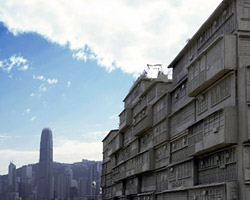
G.O.D: west kowloon walled city installation
in his scaled reproduction, douglas young captures the evolving characteristics of the buildings from the famous kowloon walled city.
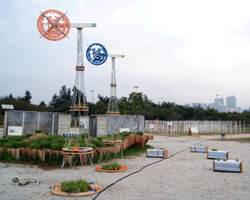
austin and mergold LLC: the grand resource
'the grand resource' project, walks a thin line between a scaled model of a grandiose wind-power harnessing infrastructure proposal and an art/design object, becoming a temporary addition to the hong kong skyline.
marco casagrande: cicada
seeking to provide 'urban acupuncture' for the industrial city, the cocoon-like installation provides a calm public space that grounds its inhabitants with nature.
jeff dah-yue shi: LED bamboo
formed of bamboo with embedded LED lights, the bamboo piece functions as a recessed luminaire in addition to being incorporated into walls as a structural component. a separate mountable lamp serves smaller spaces.
earthen school in pakistan
constructed with locally sourced clay, sand, straw and water, this school's cob and bamboo structure will be protected from earthquake and rain events.
lazerian paper light shades
lazerian launch a new range of paper light shades named after the stars that define the vertices,
which make up the nort...
solar winds cultural arts center
the solar winds cultural arts center is a design proposal for a large solar and wind powered structure dedicated to a wide var...
RENAULT 4 ever behind-the-scenes
'horsey' by eungi kim
SELFPROMO - january 17 - march 17
POP UP - january 17 - march 17
keep up to date with recent articles and upcoming events.
to receive both newsletters please check 2 boxes.
no contents, including text, photographs, videos, etc. may be reproduced in whole or in part without the written consent of designboom. in addition,
no material or contents may be reproduced on the world wide web by techniques of mirroring, framing, posting, etc. without the written consent of designboom.

submit a project
publish a project
email
RSS
facebook
twitter