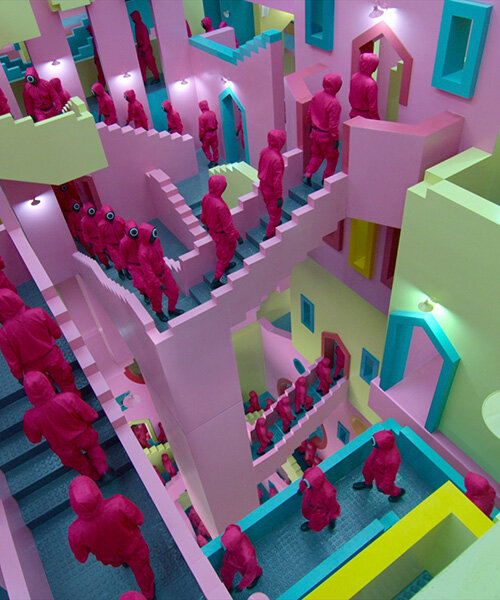
discover the architecture of netflix’s squid game
described by lee jung-jae, actor who plays seong gi-hun, as ‘almost dreamlike’, the surreal architecture of squid game becomes a character in its own.
prefer designboom on google[FEATURED]
BEHIND THE SET DESIGN OF NETFLIX’S SQUID GAME
watched by 111 million users in its first 28 days, squid game has become netflix’s biggest show ever. the nine-part series tells the story of a group of 456 players facing economic problems which have been invited to be part of six traditional games for children. the winner has the chance of getting their life back together as the cash prize totals 45,600,000,000 won (around 33 million euros). those who lose, don’t face the same faith.
the series has received worldwide praise for its script, direction, acting, and set design. ‘aesthetically speaking, we created the places and displays trying to make the viewers think about the hidden intentions of squid games with us,’ said chae kyoung-sun, art director of the show in a netflix interview.
SQUID GAME’S SURREAL ARCHITECTURE IS USED AS ANOTHER CHARACTER
described by lee jung-jae, actor who plays seong gi-hun, as ‘almost dreamlike’, squid game’s surreal set becomes a character of its own. when examined in close detail, each set is full of references that showcase the contradictions of modern society. colorized — most of the time — in vibrant hues reminiscent of childhood, the architecture is used as another resource to make both actors and viewers uncomfortable.
‘whenever we moved to a different set, I’d wonder how this one would look, it made me so curious,’ actor lee jung-jae continued in a netflix interview on youtube.
UNSETTLING CLEAN, MINIMAL SPACES REFERENCING ARTWORKS
the games are hosted in clean, minimal spaces that result somewhat unsettling. to contrast these scenes, dark, cave-like spaces have been created for dirtier activities like organ traffic. in fact, the outside world is portrayed as dark and cold, distinguishing it from the game world which is covered in pastel colors.
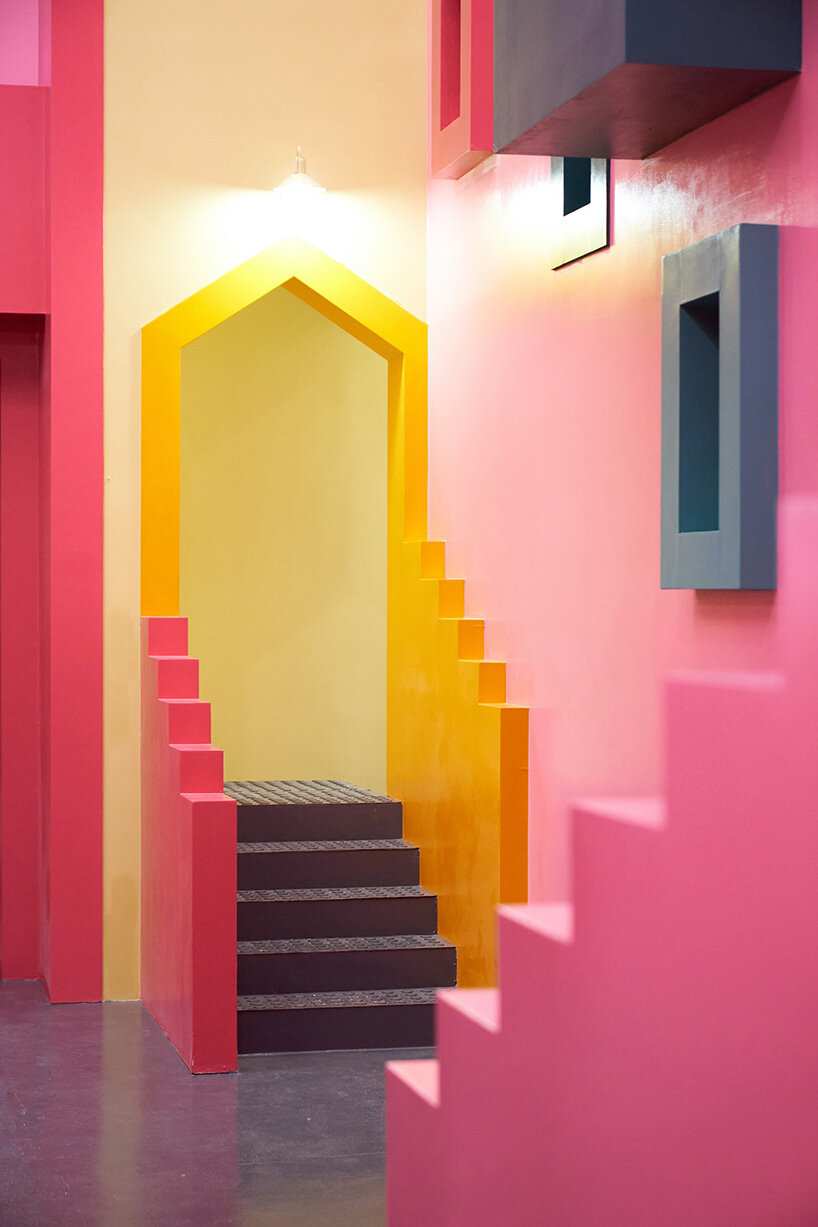
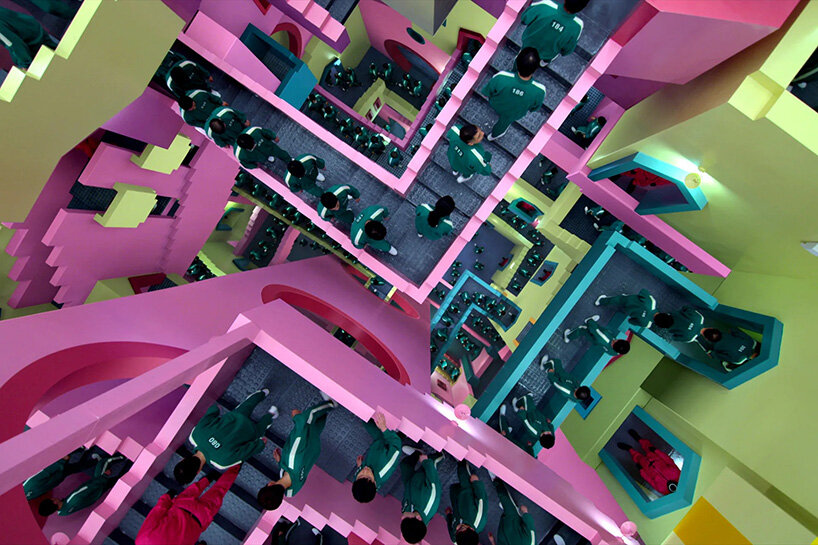
squid game’s director, hwang dong-hyuk, said in a youtube interview that he was inspired by MC escher’s relativity to build the stairs inside the game’s headquarters. interwoven and defying gravity, the stairs also exude a strong reference to ricardo boffil’s la muralla rosa in spain.
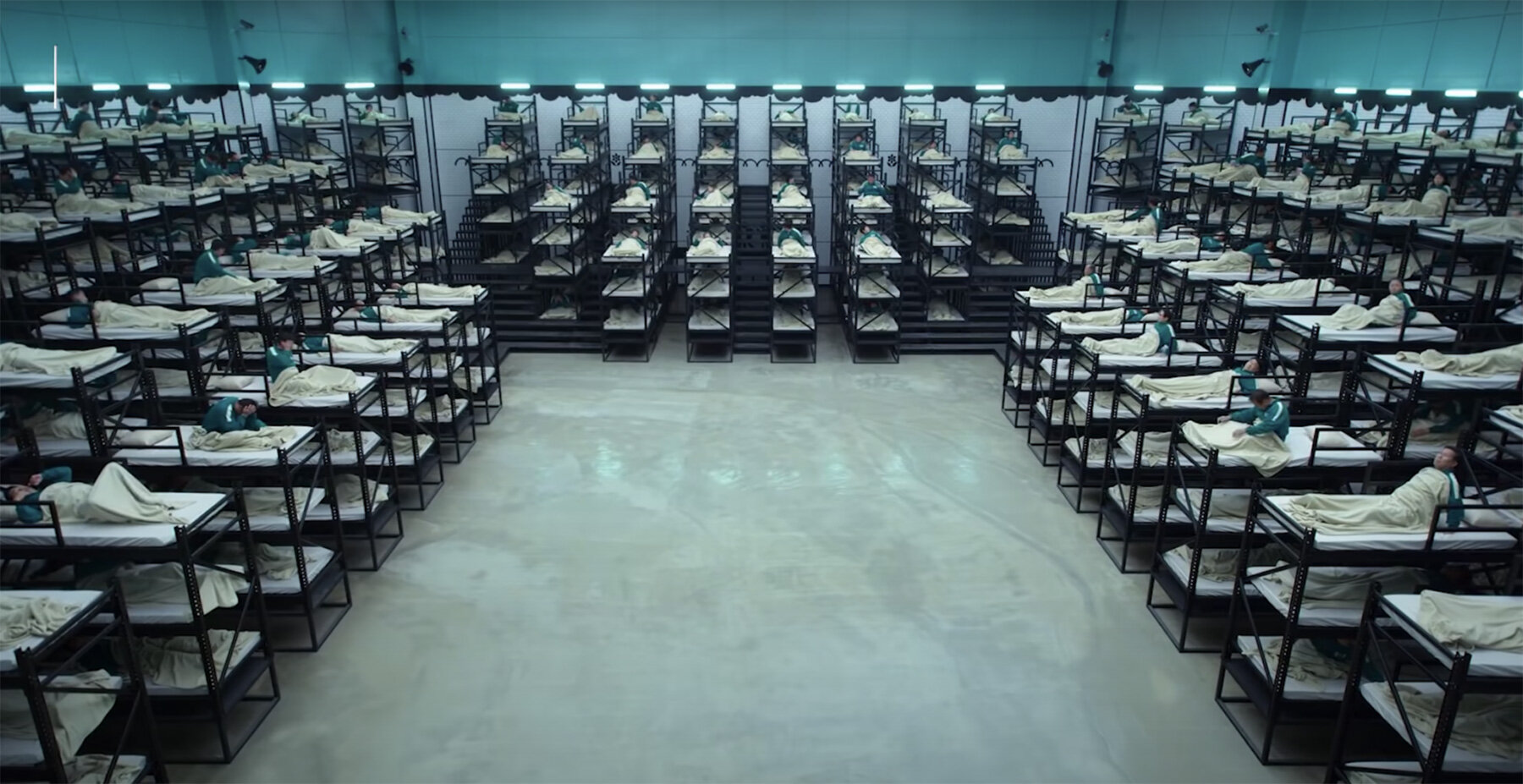
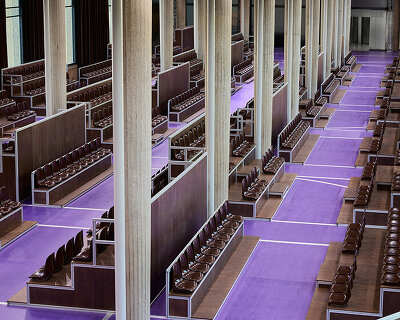
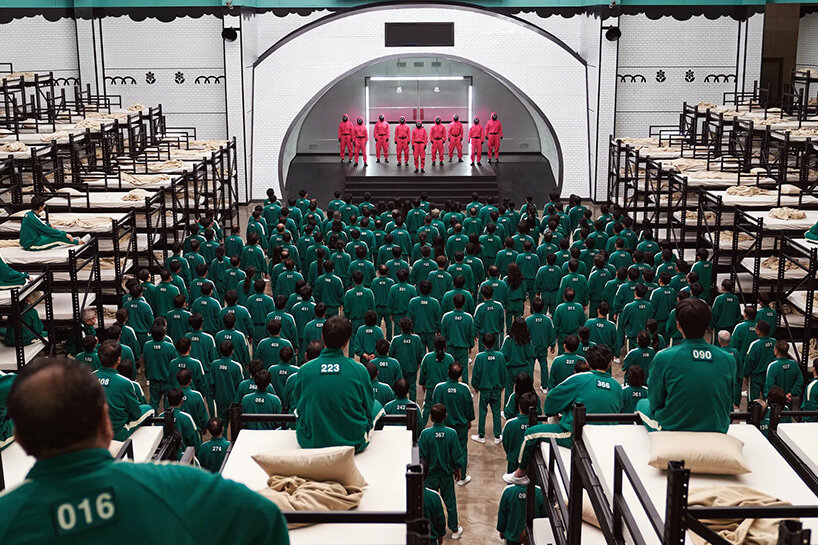
the dorm, or place where the participants sleep, looks like an escalated amphitheater made of bunk beds, some with up to even 7 levels. ‘the art director proposed a warehouse store concept,’ continued director hwang dong-hyuk. ‘rather than treating them like people, she suggested the contestants be presented like objects piled on the warehouse shelves.’
about the design, art director chae’ kyung-sun added that ‘since modern society is in constant competition to climb the ladder, we thought about portraying that in the bed design.’
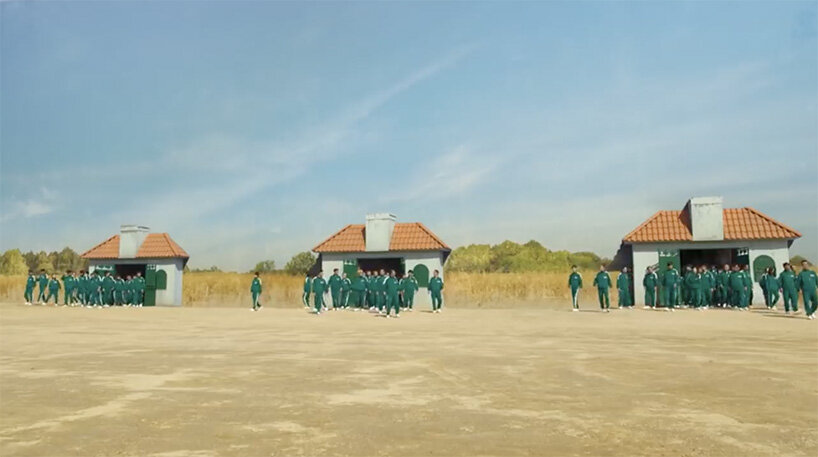
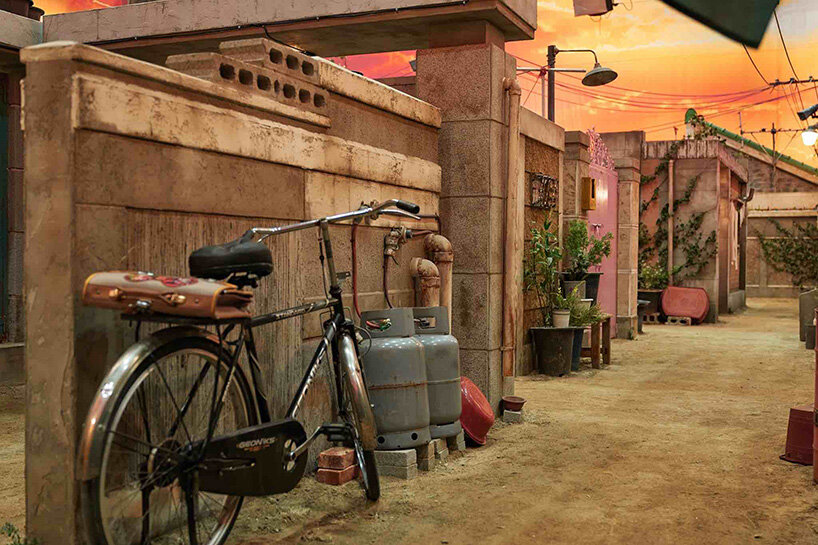
the surreal flare continues into the first arena, were gabled terracotta houses recall a drawing made by a child. this yard is used to play the red light green light game where a gigantic robotic doll conducts the game. equipped with cameras as eyes, the doll evokes surveillance in prisons, while its intimidating scale makes the participants look even smaller.
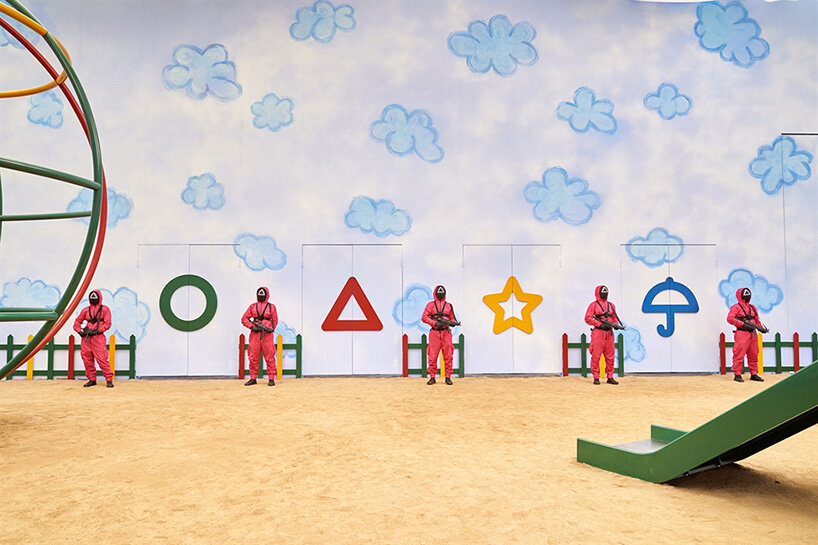
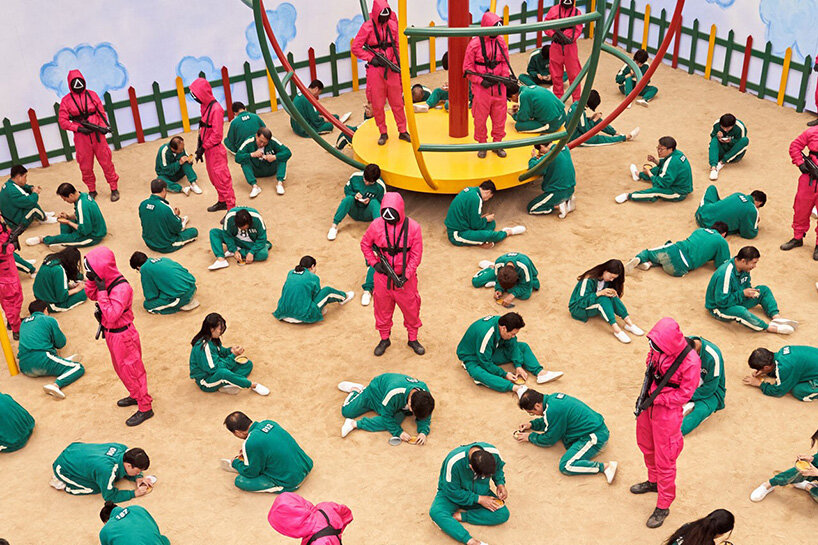
for the dalgona challenge, players find themselves in a playground where the slides, swings and climbing frames are also oversized. ‘when we were young, the playground seemed very big,’ said hwang. ‘so we built a giant playground for adults.’
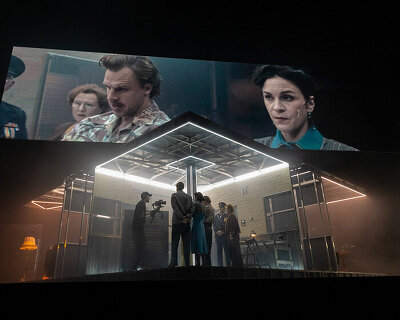
another reference to contemporary architecture can be seen in the waiting lounge, where a white, brightly illuminated space recalls designs by zaha hadid or santiago calatrava. art director chae kyung-sun explained that they ‘[were attempting to create] some kind of uneasy feeling that comes from a white room, not knowing what will happen next. we wanted to create an unknown space.’
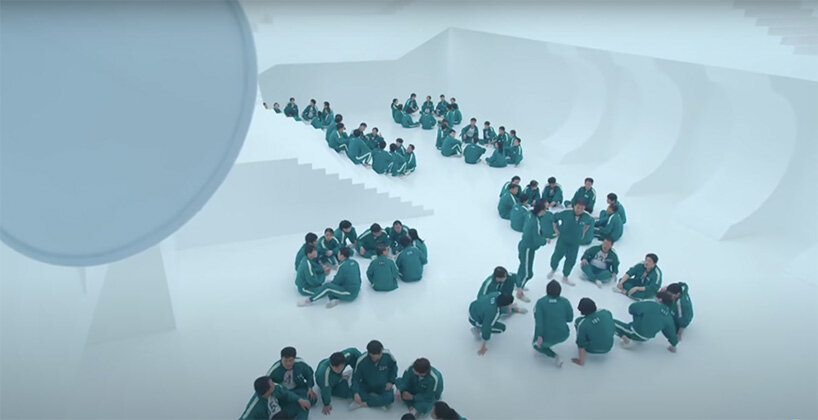
throughout the series, architecture is used as a tool to enhance tension, joy, and emotion, adding a great visual and spatial element to the storytelling.
project info:
name: squid game set design
via: architizer
shop
your own online design shop — no sales commission collected