
imaizumi area of kesen-cho, rikuzen takata city on april 4, 2011 image © naoya hatakeyama courtesy the japan foundation
‘architecture in the wake of disaster’ will be the central focus for the japan pavilion at the venice architecture biennale 2012 in italy. in a press conference held on october 31st, the japan foundation announced the exhibition which has been curated by the commissioner, architect toyo ito. the emergency and temporary housing project ‘home-for-all’ is a collaborative venture to reconstruct the city of kamaishi, japan after the destructive earthquake and tsunami, developed by ito himself in collaboration with architects kumiko inui, sou fujimoto and akihisa hirata. the small structures offer a comfortable place to relax, gather, eat, drink and talk countering the hardships found in public evacuation shelters or temporary dwellings.
visitors will be introduced to photographs by naoya hatakeyama documenting the destruction which will set the tone and purpose for the exhibit. the display will contain a sampling from the 900 sketches received from architects and students from around the world which represent conceptual ideas for the designs. the study drawings and models from the extensive discussions between the architects will ultimately lead to a full scale installation of the homes which will be relocated to japan at the end of the event in november of 2012.
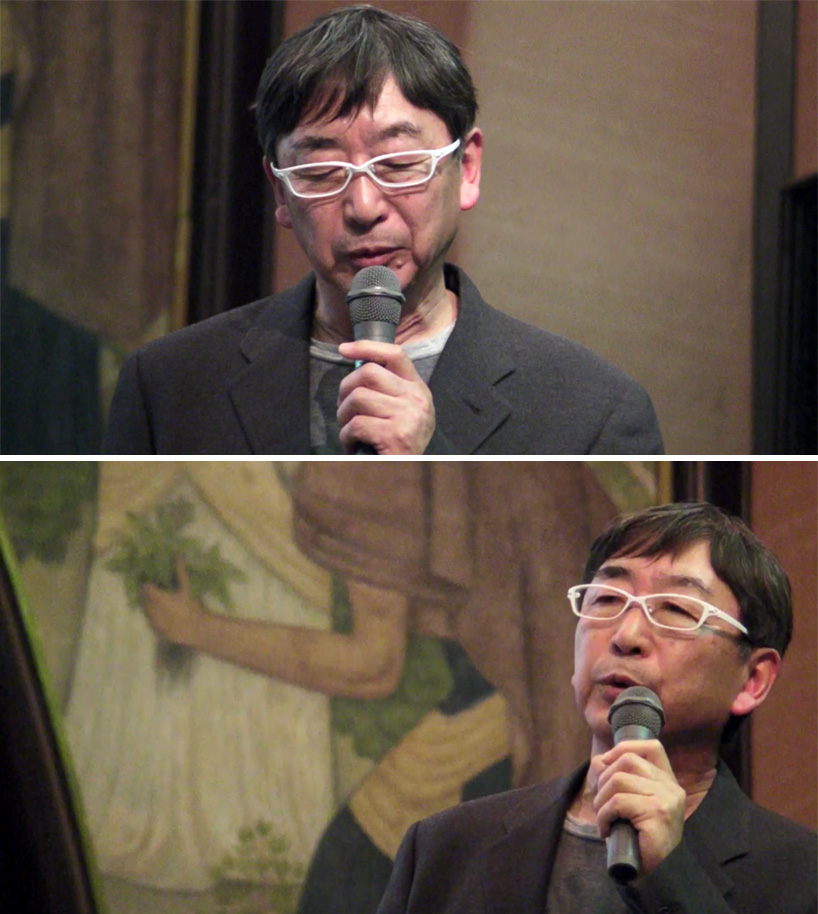 toyo ito giving presentation at the symposium ‘311: starting over from point zero’, organized by TOTO gallery maimage © designboom
designboom attended the symposium ‘311: starting over from point zero‘, held on november 2nd, 2011 at the university of tokyo, to coincide with the 311: lost homes exhibition at the TOTO gallery ma, where toyo ito lectured on ‘what we can do to aid rejuvenation and architecture’.
‘several months after the massive earthquake and tsunami hit the tohoku coast in eastern japan, calm seas and lush vegetation have finally returned to the devastated floodplains. as spring green began appearing among the rubble and the sounds of songbirds were heard again, so human activity, too, resumed, making way amid the debris for the resumption of normal activities. in their impetuous efforts to rebuild homes and work places from scratch, we are witnessing the determination and power of people’s primal instinct to survive and carry on with their lives. in that energy we cannot help sensing the vitality of ‘building’ and ‘living’, the fundamental meaning of which we had nearly forgotten in the course of ordinary daily life before the disaster. as an architect, I cannot help asking myself: can I really create architecture that lives up to the expectations of people with this vibrant will to live?
in order to pursue that question I have launched the ‘home-for-all’ project. the project is a venture to create small but comfortable places for rest and relaxation where those who lost their homes in these regions can gather, keep themselves warm, eat and drink, and talk together. these places will bring creature comforts to those who have been forced to endure hardships in public evacuation shelters and temporary dwellings, and furthermore becomes ‘hubs for discussion of reconstruction’. the home-for-all is to be a simple structure built right in the midst of the debris. it can be devised from a partially destroyed home or building in a former residential or shopping district. or it might be a farmer’s storage shed that survived the tsunami. furnishing such places with cooking stoves, clean tables, and the like, my idea is to change such places into cozy havens—primitive perhaps—but generating warmth and hope, and through them to examine fundamental questions about the raison d’être of architecture.
our first home-for-all was completed in one of the disaster-stricken areas on october 25, 2011. based on on-going conversations with people now living in temporary dwellings, a small house has taken shape that reflects their wishes. and in response to our call for ideas sent out to architects and architectural students around the world, we have received nearly 900 sketches of what contributors thought a home-for-all should look like. I am involved in reconstruction and community building in the city of kamaishi, iwate prefecture. for the next year, I will frequent this and other areas hit by the earthquake and tsunami, together with the three young architects kumiko inui, sou fujimoto, and akihisa hirata. and we will be asking ourselves: what should this primal, original house should be like? I plan to exhibit the whole process of our thinking and discussion in this quest, raising the question ‘what is architecture now?’, using photos documenting the reconstruction taken by photographer naoya hatakeyama, to architects visiting venice from around the world. the home-for-all that is to be built as the result of our year-long discussions will be sent to the affected area following the exhibition. the structure will not be just a display for the sake of exhibition but represent a journey of inquiry into the architectural unknown that was made possible by the occasion of the biennale.’ – toyo ito
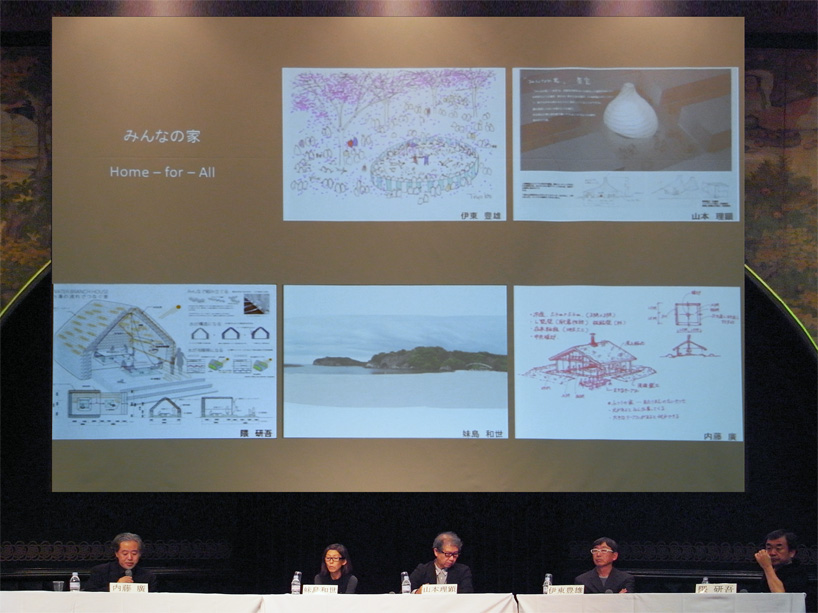 at the symposium ‘311: starting over from point zero’, (from left to right) hiroshi naito, kazuyo sejima, riken yamamoto, toyo ito, kengo kuma image © designboom
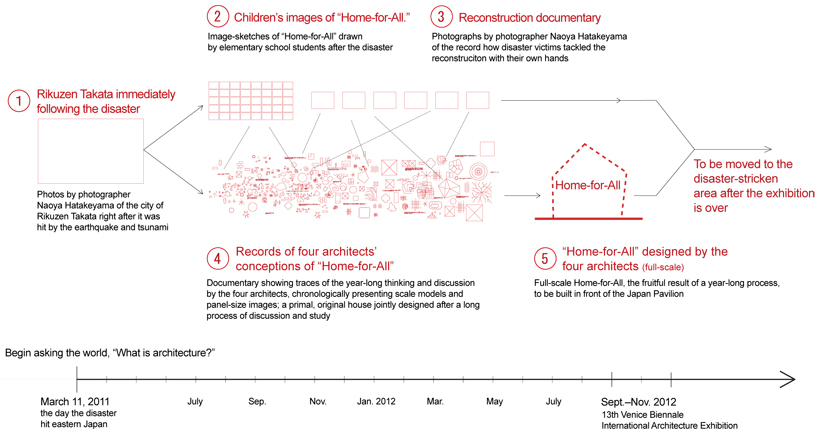
‘architecture in the wake of disaster’ in the japan pavilion for the 13th venice biennale international architecture exhibition image courtesy toyo ito and the japan foundation
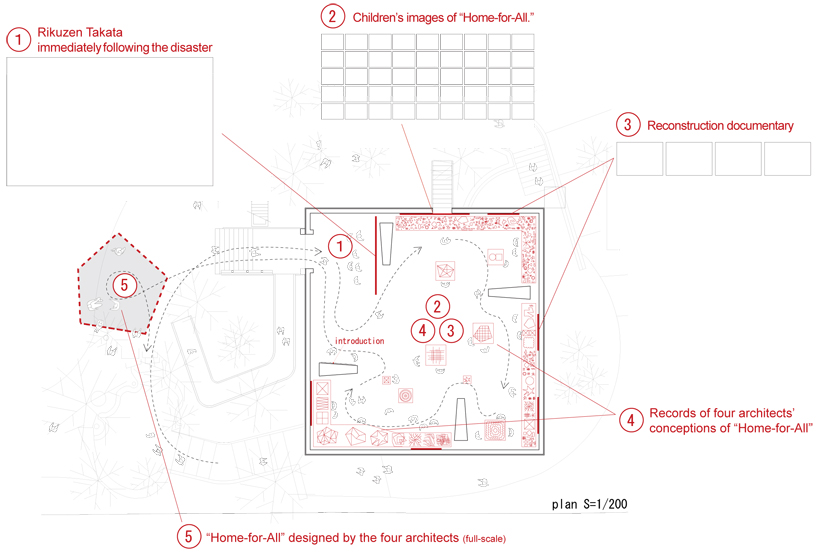 sequence of the exhibition ‘architecture in the wake of disaster’ in the japan pavilion for the 13th venice architecture biennale image courtesy toyo ito and the japan foundation
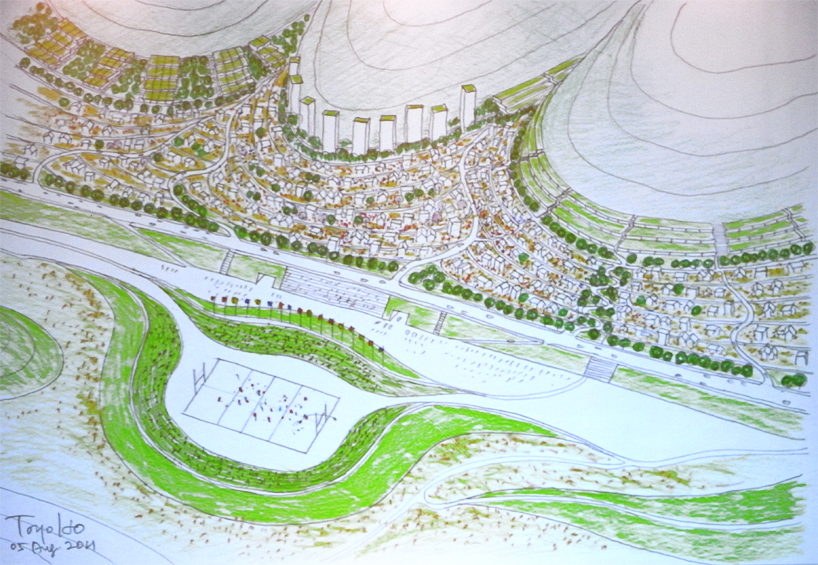 sketch by toyo ito, shown at the symposium, photographed by designboom, image courtesy toyo ito
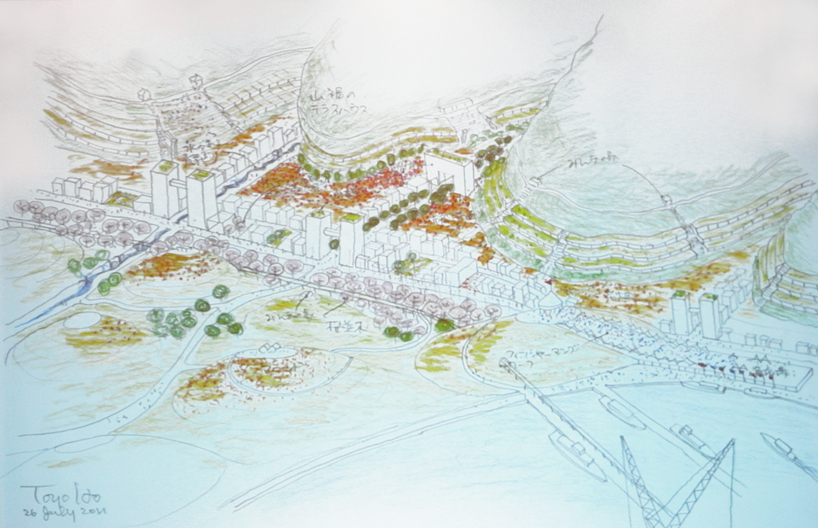 sketch by toyo ito, shown at the symposium, photographed by designboom, image courtesy toyo ito
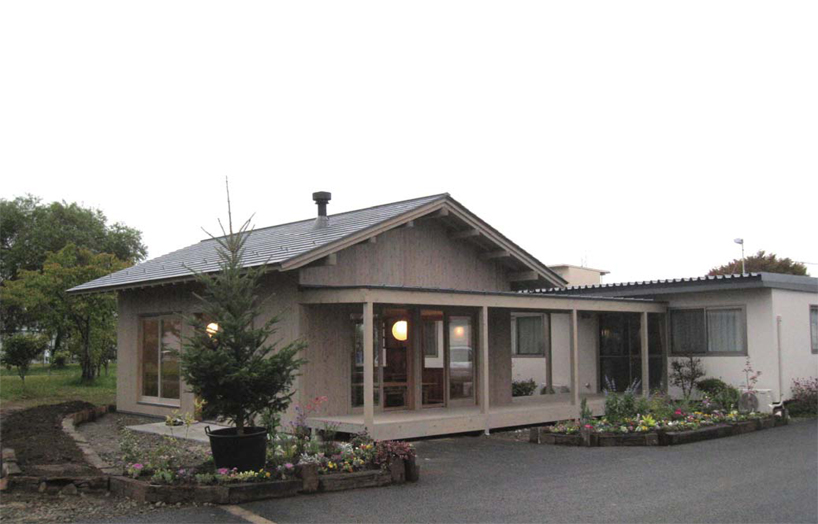 home-for-all built in the miyagino ward in the city of sendai image courtesy toyo ito
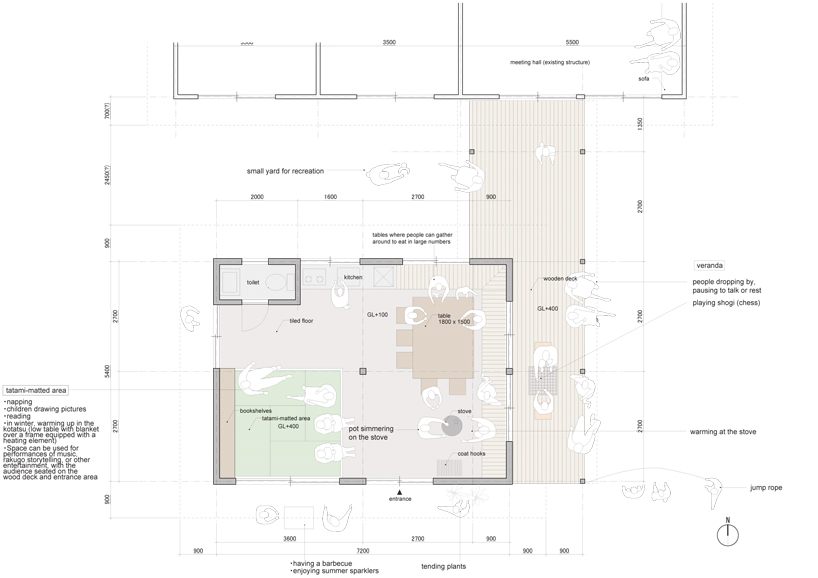 floor plan /level 0 of home-for-all, built at one of the temporary settlement sites, image courtesy toyo ito
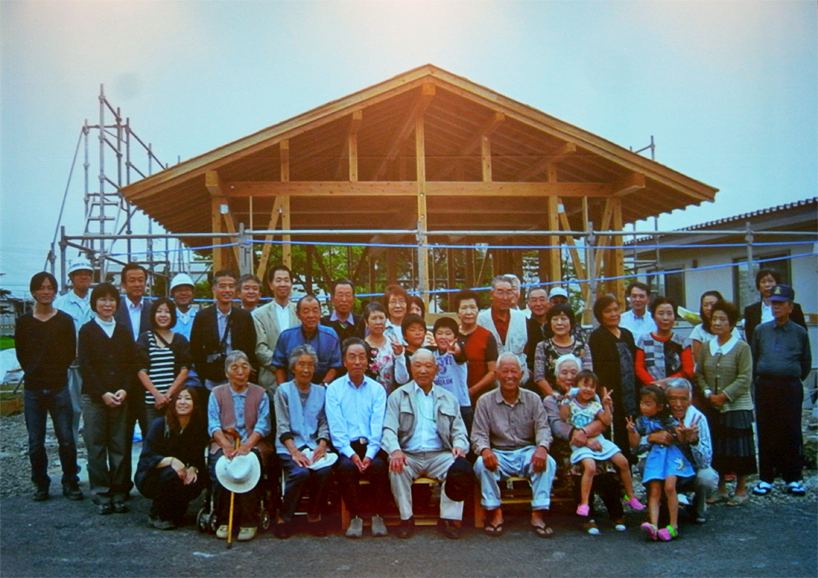 construction of the ‘home-for-all’ project, image shown at the symposium, photographed by designboom, image courtesy toyo ito
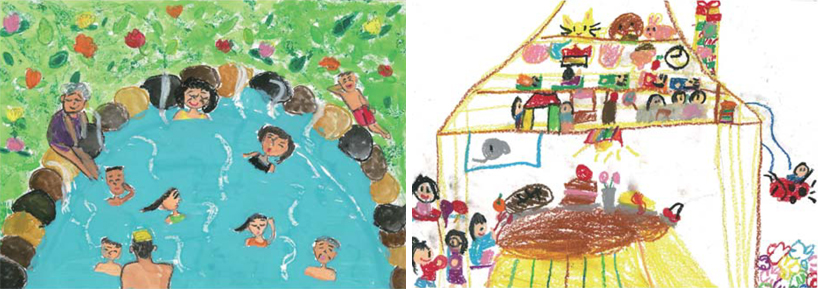 sketches of home-for-all by elementary students in imabari, ehime prefecture, (left) 6th grader, (right) 2nd grader, shown at the symposium, photographed by designboom, image courtesy toyo ito
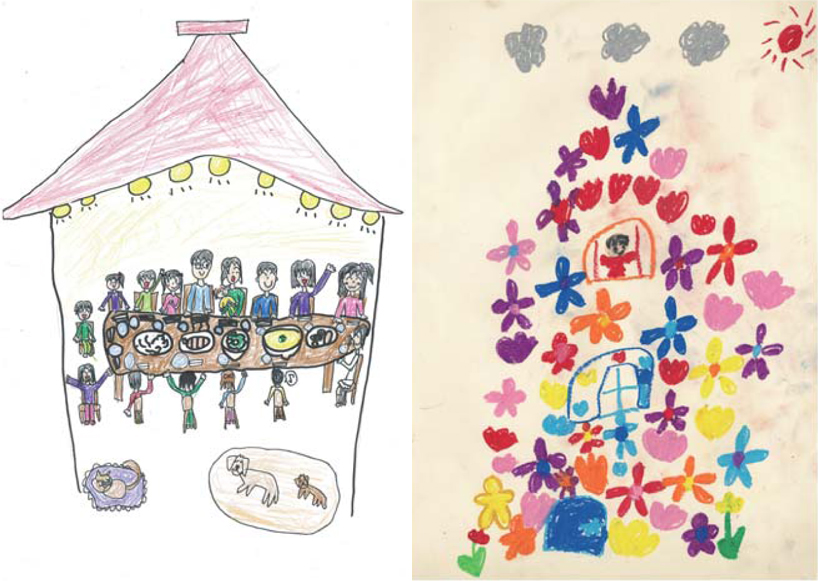 sketches of home-for-all by elementary students in imabari, ehime prefecture, (left) 5th grader, (right) 2nd grader, shown at the symposium, photographed by designboom, image courtesy toyo ito
akihisa hirata (22)
 Aug 21, 2024
 Jun 22, 2018
 Apr 16, 2018
 Apr 19, 2015
 Apr 17, 2013
kumiko inui (7)
 Jan 26, 2013
 Aug 27, 2012
 Jun 28, 2012
 Feb 16, 2012
 Oct 19, 2009
sou fujimoto (100)
 Apr 14, 2025
 Feb 05, 2025
 Dec 02, 2024
 Sep 26, 2024
 Jul 15, 2024
toyo ito (56)
Dec 02, 2024 Jan 06, 2023
 Nov 08, 2022
 Feb 02, 2022
 Nov 17, 2021
venice architecture biennale 2012 (66)
 Jan 03, 2013
 Nov 13, 2012
 Oct 14, 2012
 Sep 18, 2012
 Sep 18, 2012
 May 29, 2025
 May 28, 2025
 May 23, 2025
 May 19, 2025