‘nested’ skyscraper
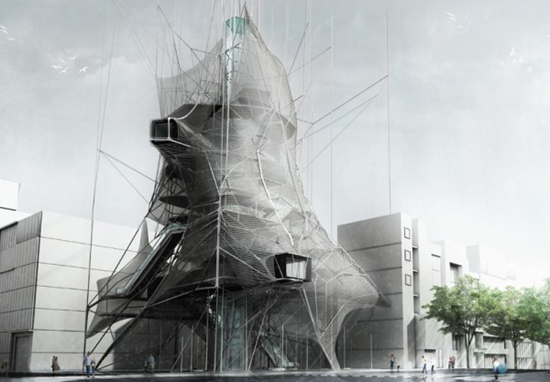
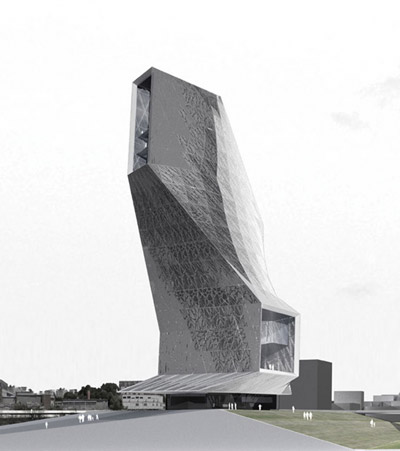
american architects ryohei koike and jarod poenisch received third place at the 2010 skyscraper competition hosted by evolo magazine for their proposal of ‘nested’ skyscraper.
today the city bombards individuals with buzzing electronic media and a never-ending sea of concrete structures. koike and poenisch wanted to deviate from these rigid forms in their proposal. the ‘nested’ skyscraper design gives the appearance of weightless and fragile structure that can adapt to climatic, urban and programmatic conditions with the use of advanced materials and robotic constructions. ‘nested’ skyscraper seeks to blur the distinctions between interior and exterior, working with the surrounding nature to bring users closer to the exterior landscape.
 ‘nested’ skyscraper
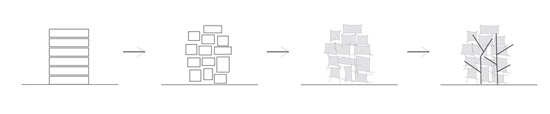
projected to be situated in tokyo, the architects observed that this location is known for its extreme climate changes, densities, earthquakes and flows. ‘nested’ skyscraper looks to counteract these extremes with lightness, flexibility and transparency. using primarily composite materials and a dual layer fascade composed of ETFE (ethylene tetrafluoroethylene), the entire building can be lightweight and flexible, while the construction process uses far less energy. the materials offer a high degree of transparency by capturing natural light. the facade is composed of multiple layers of EFTE strips which thicken and grow in density according to solar exposure, minimizing the amount of material used but maximizing their performance. the building acts as a series of nests that stretch between and around compressive elements as the vertical circulation wraps around and pierces through the entire project. together the materials and volumes create a hybrid relationship between compressive and tension elements, public and private spaces, and static and dynamic forms.
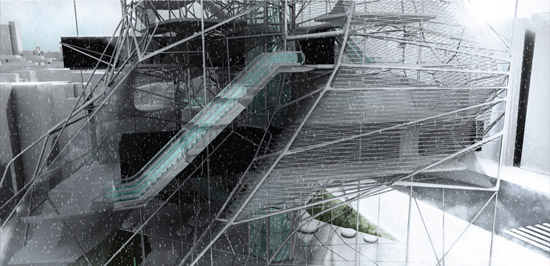
 sectional view
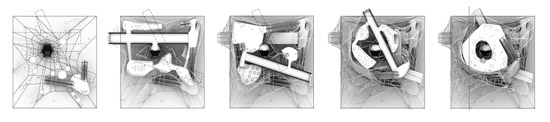
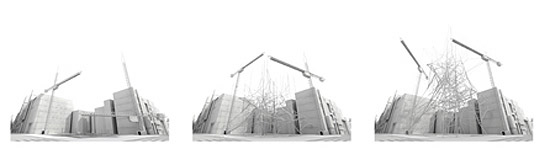 construction of ‘nested’ skyscraper in phases phase 1: flatepack carbon sleeves phase 2: sleeves stretch phase 3: full stretch
 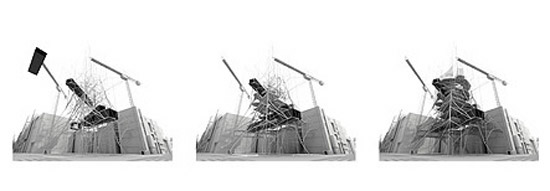 construction of ‘nested’ skyscraper in phases phase 4: box installation phase 5: floor plate construction phase 6: skin formation
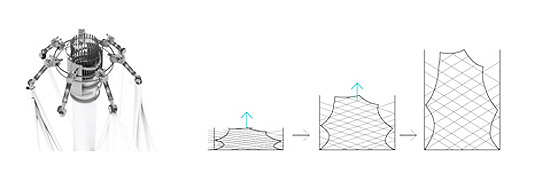 construction of primary structure using climbing purtrusion robots
building this structure involves a series of robots that stretch over a network of carbon sleeves sprayed with fiber-laced concrete. a second set of robots wraps the structure with a steel mesh to allow for lateral movements and can increase or decrease its density according to structural and programmatic needs.
2010 skyscraper competition (13)
 Mar 18, 2010
 Mar 18, 2010
 Mar 17, 2010
 Mar 16, 2010
 Mar 16, 2010
 May 19, 2025
 May 15, 2025
 May 14, 2025
 May 09, 2025